
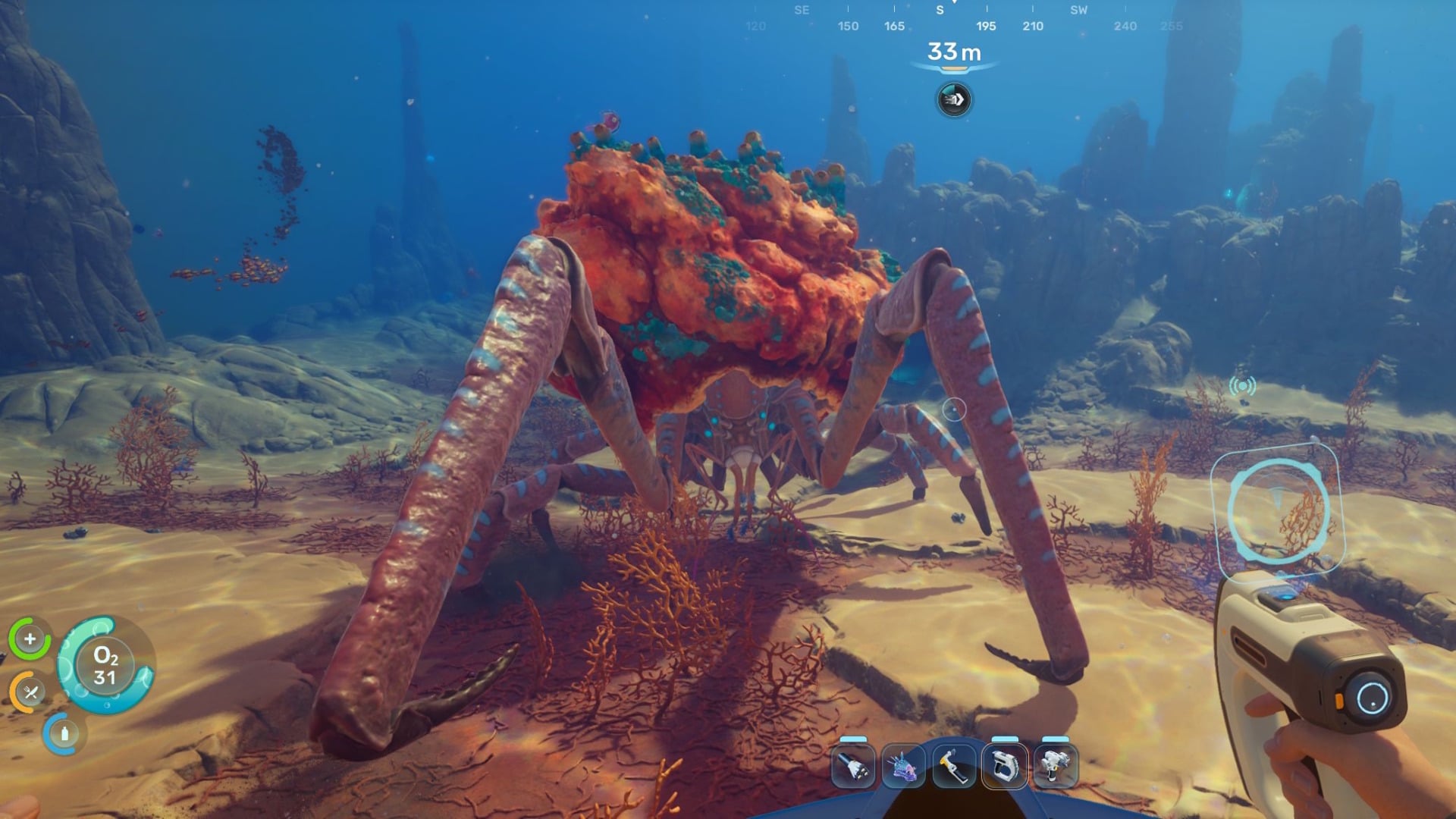
I like you, Subnautica 2, you’re really great, but I just don’t want to hold hands with you all the time. I need my own space, too. I’m don’t want to break up! I love spending time with you. But, you know, sometimes I just want to swim off alone in my own direction.
The follow-up to 2014’s Subnautica has been embroiled in some very unusual controversies between its developers and its publisher, but today we’re putting all that aside and focusing entirely on the game itself, without any second-guessing about how behind-the-scenes antics might have affected the shape the game is in for its Early Access debut. What’s it like playing Subnautica 2, Steam’s most wishlisted game, right now?
The answer is complicated. On one level, I’ve spent a compelling ten hours exploring a new alien ocean, uncovering its storyline, and building a base that feels like home, often really enjoying myself. On another, I have been astonished by just how much Subnautica 2 wants to tell me how to play it, with heavy-handed over-direction and a gated ocean that necessitates I experience the game in the order it intends.
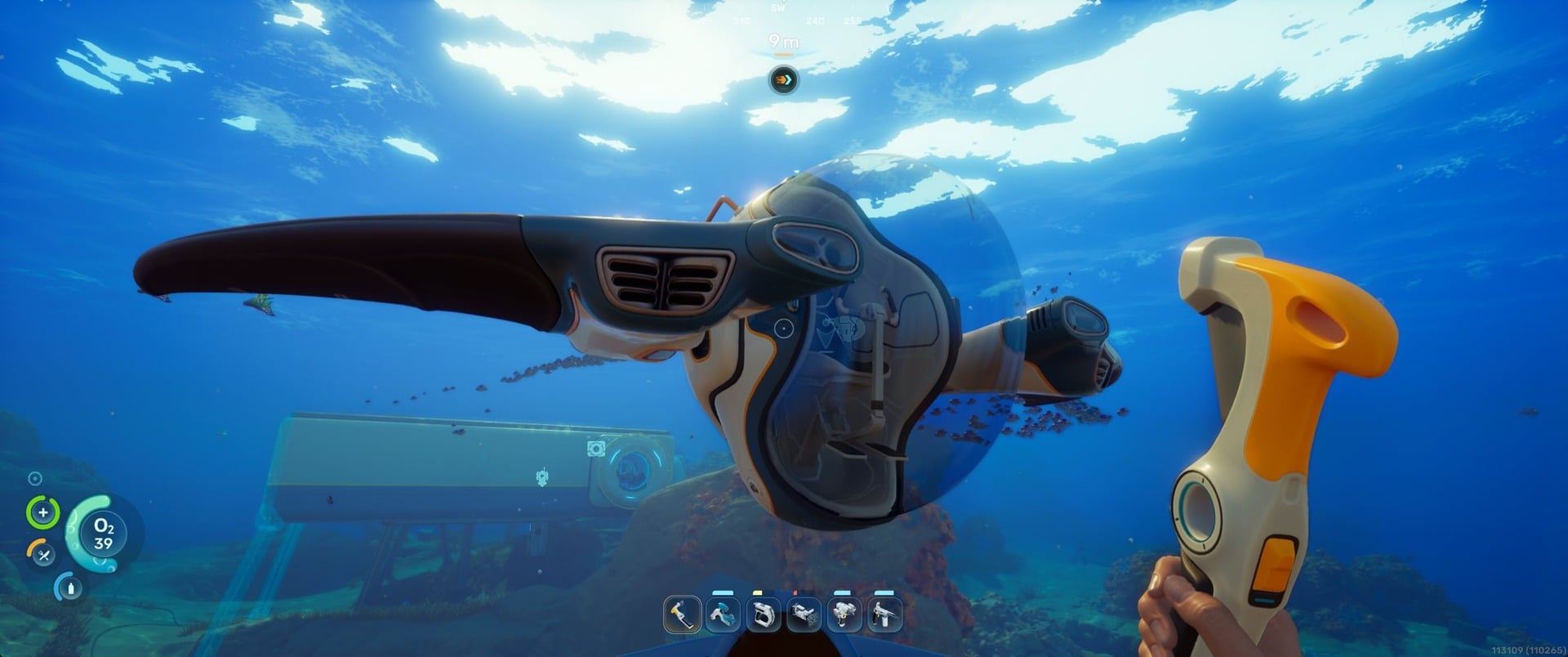
One of the great features of the original Subnautica was the way the crafting and exploring underwater game was so blissfully quiet. There was a story—a superb one—but it was there for you to stumble upon, your impetus to progress based on the joy of exploring ever further and ever deeper as your technology allowed. Subnautica 2 is never quiet. It never bloody shuts up. There’s so much dialogue, so much capital-p Plot, that I’ve never felt like I could just swim off in a new direction just to see what’s there. And, if I try, I encounter some gating that prevents me: it’s too hot, it’s too deep, it’s too far from oxygen… When I then go in the direction of the next quest marker, oh, what’s this, an upgrade that allows me to survive more heat, more depth, less oxygen.
That story begins with you, a Pioneer looking for a new planetary home, crashing into the seas of a planet you were never intended to reach. In your life pod, with just a replicator, computer, and a cupboard, you need to begin exploring the scattered wreckage of your shipwrecked spaceship and scanning the flora and fauna of this new world. And that’s what we wanted, right? Except that computer I mentioned is NoA, an AI that is determined that your mission should continue, instructing you to find the black box recordings of many of the ship’s downed crew. These appear as quest markers in the ocean, and are scattered like breadcrumbs for you to judiciously follow. Don’t follow them, and you’re going to have very limited progress. (I’m deliberately not getting into the actual overall plot here, because you really don’t discover it for a good five hours.)
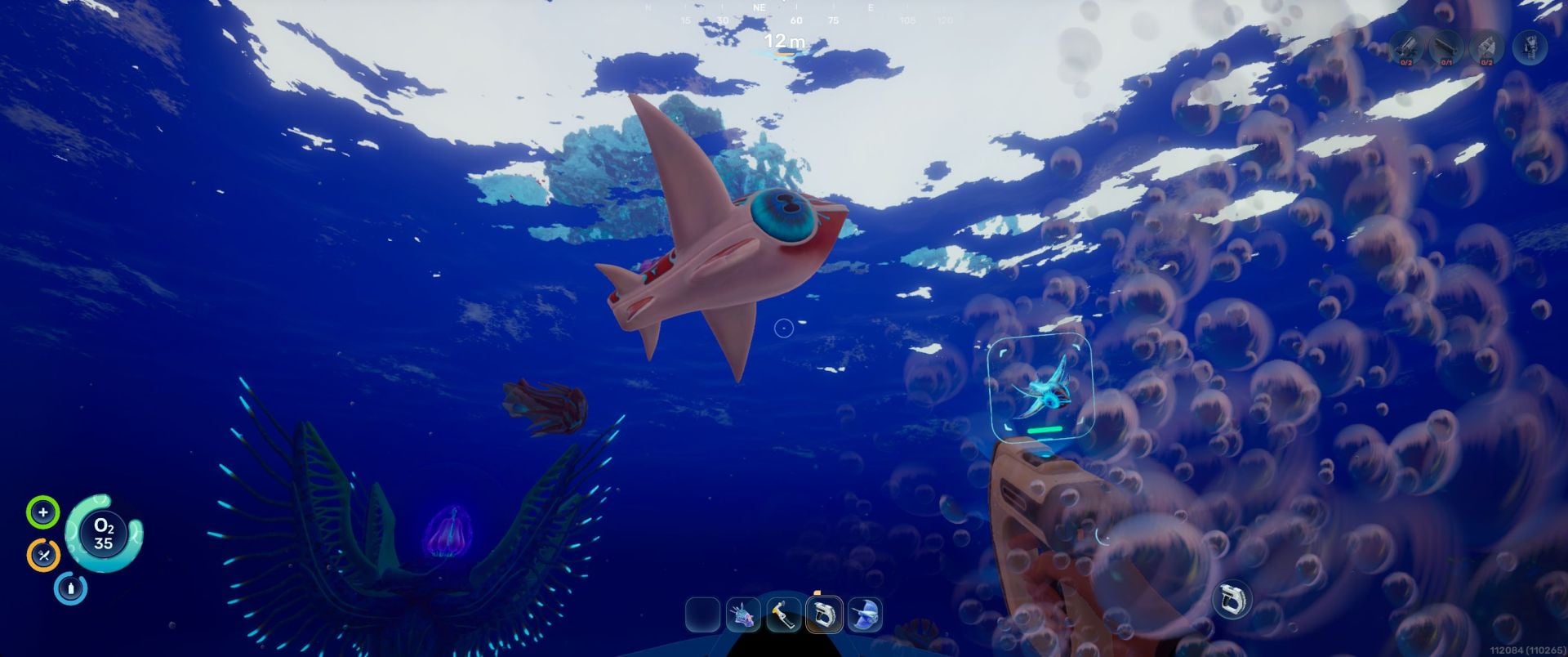
NOA is just one of the many voices endlessly chattering away in your ear. Not only is this wordily emotional AI painfully obviously suspicious, but it has so much to say to you at every opportunity, while directing you to listen to the voice recordings of a couple of dozen other characters. Then you have a computer voice incessantly telling you when you have 30 seconds of air remaining (in the most astoundingly posh clipped English), announcing details of new areas you swim into, and nagging at you when you’re hungry and thirsty. And there’s yet another voice that you cannot stop welcoming you to your base or vehicle every time you swim in the hatch or open the door. ARGH! JUST SHUT UP! Where’s my underwater solitude?
This is then made rather more grating by a bizarre conflict in the writing. The NoA stuff, the larger plot, is often extremely well written and pleasingly hard sci-fi. But so many of the voice notes and other voiced details are wildly incongruent, snippy, sarcastic fourth-wall-breaking jabber, and I hate them. It’s like two entirely different writers both got to put their work into the game, and no one checked to see if they matched.
If there hadn’t been a Subnautica, I likely wouldn’t be riled by this. But the issue is that one of the most glorious things about that first game was that sense of solitude, of surviving against the odds in a world where the fishies were your friends. Here, you feel like one of so very many people, with research labs and wrecks and ruined underwater bases all previously established and littered with the remains of those who came before. You’re late to the party, rather than first on the scene.
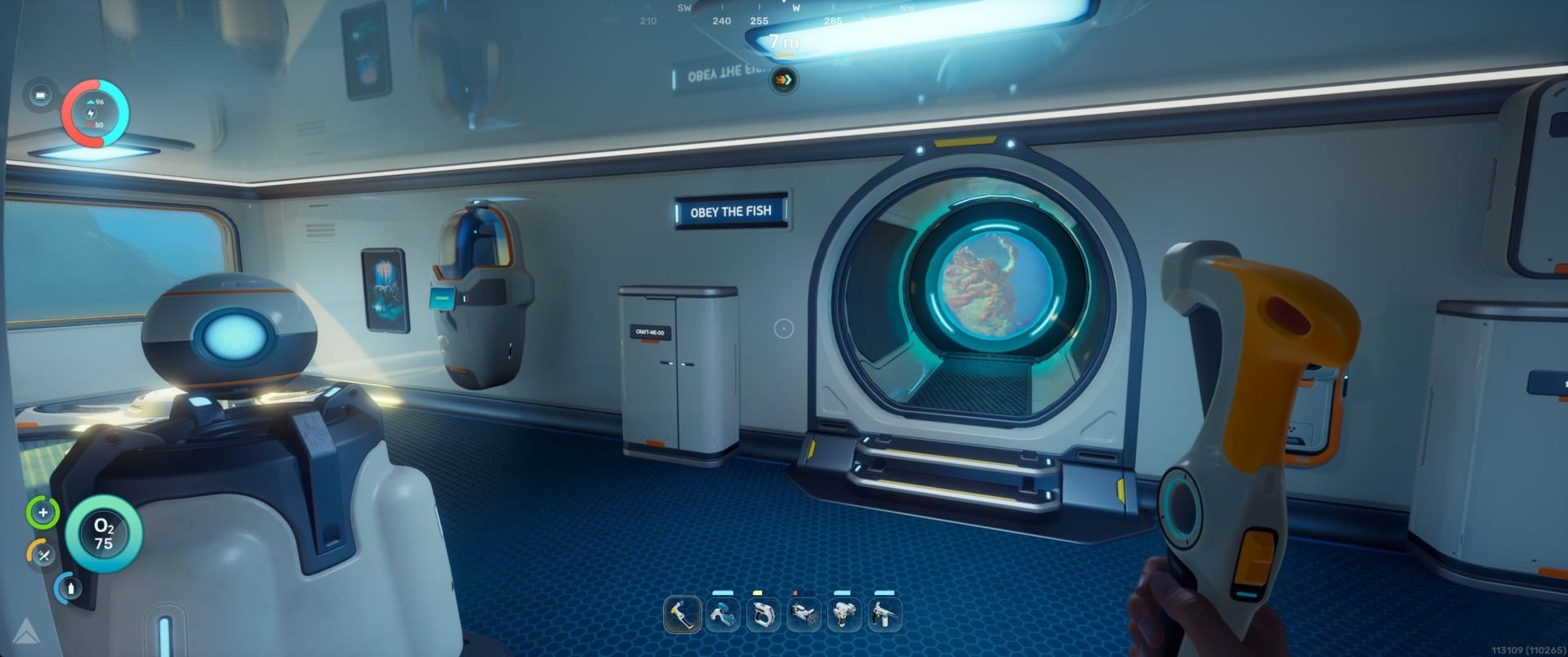
Yet this is a solid, entertaining craft-me-do. Remove the comparison, and you have a story-led crafting adventure in an alien ocean packed with brand new bizarro sea creatures—some benign, some deeply threatening—where resourcefulness allows you to quickly establish a homely base, build underwater vehicles, and seek out alien structures. You go from eating burnt fish in a life pod to fine dining in a luxurious underwater home replete with posters, tasteful lighting, and walls of labeled cupboards in a matter of hours. There’s an awful lot already here, too. Venture far enough (while avoiding stepping outside of what’s bug-tested for this first stage of Early Access) and you’ll discover whole new sections of the game to explore, with more voiced dialogue, brand new species, and be encouraged to set up a second, more distant base.
Death and rebirth are explained in Subnautica 2, because everyone on this mission was or is a “printed” person. Minds are uploaded to a machine, and then a body is 3D printed to host it. So when you die here (and weirdly the plot forces you to do it on purpose), this explains how you reappear back at your home. (It makes very little sense of how you lose some of the items you died with, but keep others.) Not only is this here to justify why death is not the end, but it also begins to play into the plot as you might expect. (There’s an especially good narrative section where you speak to the “ghost” of one such disembodied memory.) It also means that you can change your body type, gender, race, etc., whenever you want, although given that this is a first-person game, that doesn’t exactly add much. (It’ll make more sense in multiplayer.)
Oh, and it’s all beautiful. Even running on Medium, the game looks utterly incredible, the seascapes and structures all glistening wonderfully, with brightly colored fish and features. This really is an aesthetic treat, and that even extends to the base-building. The UI is extremely effective at showing you what you’re about to build and where, making first-person building a lot less clumsy than it so often can be. It’s certainly odd the way it only lets you extend the size of rooms in thin little increments, but they’re impressively malleable, letting you build far more bespoke bases. Scan enough little extra details in the abandoned ruins and you’ll get all sorts of decorative items as well, which given you’ll spend so much time in there crafting your heart out, makes it feel much more comfortable.
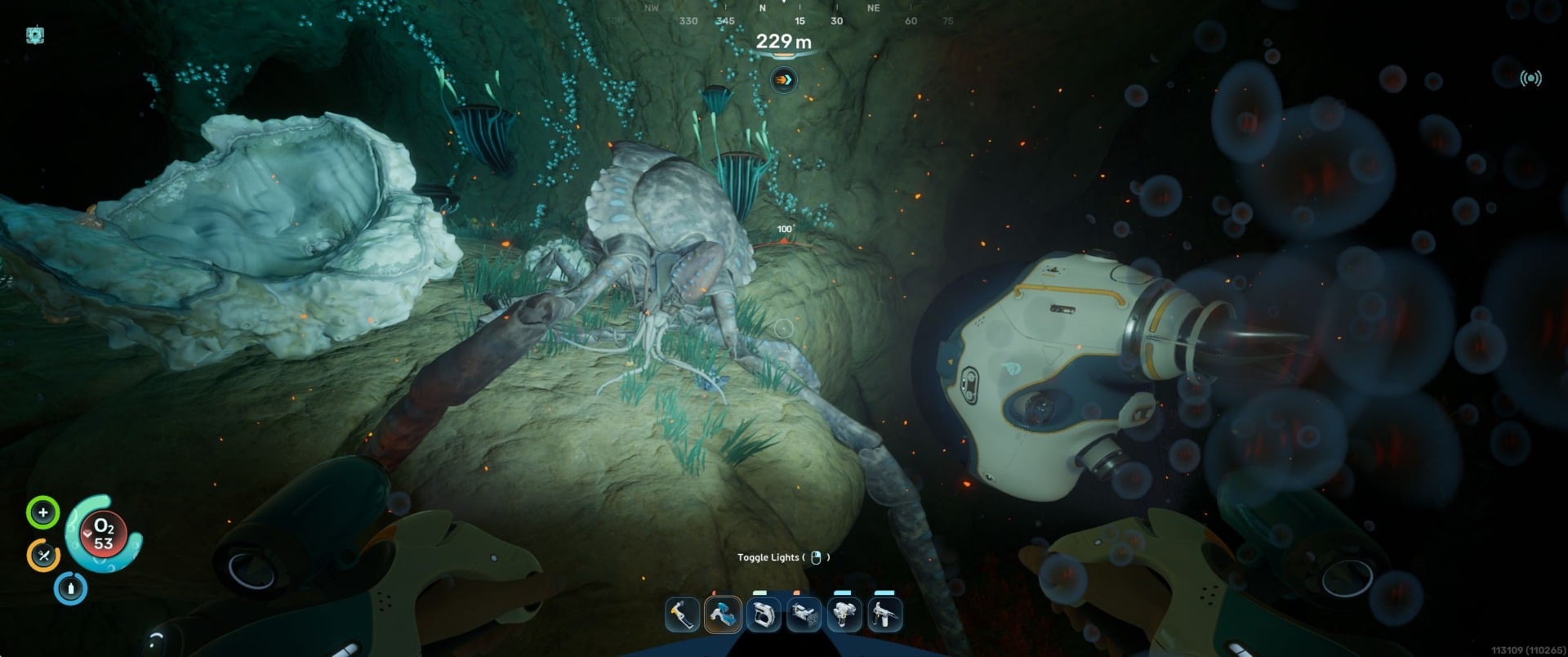
This is, of course, day one for Early Access, and Unknown Worlds intends to spend two to three years continuing development in conversation with the community. Subnautica is the example by which all other Early Access ventures should be measured, so there’s good reason to expect big things. I imagine the earliest changes will be to address just how tiresomely limited you are for O2 for far too long in Subnautica 2, starting with just 45 seconds and the first few hours only offering one upgrade that only boosts you to a measly 75 seconds. It’s incredibly annoying that getting that any higher requires finding scans and minerals that can only be reached far farther into the game, such that I’ve yet to get there. Food and water consumption rates are also set much too fast, and while both are easily replenished, they become a constant irritant when you’d far rather get on with exploring. These are, of course, easy tweaks.
Getting the game away from its linear chain of map markers is going to be a bit harder, but I think it’s pretty vital. There’s almost no variety to it, either, the NoA just adding on yet another black box signal when you find the last, and while all of these are deliberately placed to have you also discover items and crafting materials you need for progression, the feeling of being pulled through the ocean by the game’s fingers up your nostrils is impossible to escape. I want far less of that, and far more of the moments of wonder that punctuated the original game.
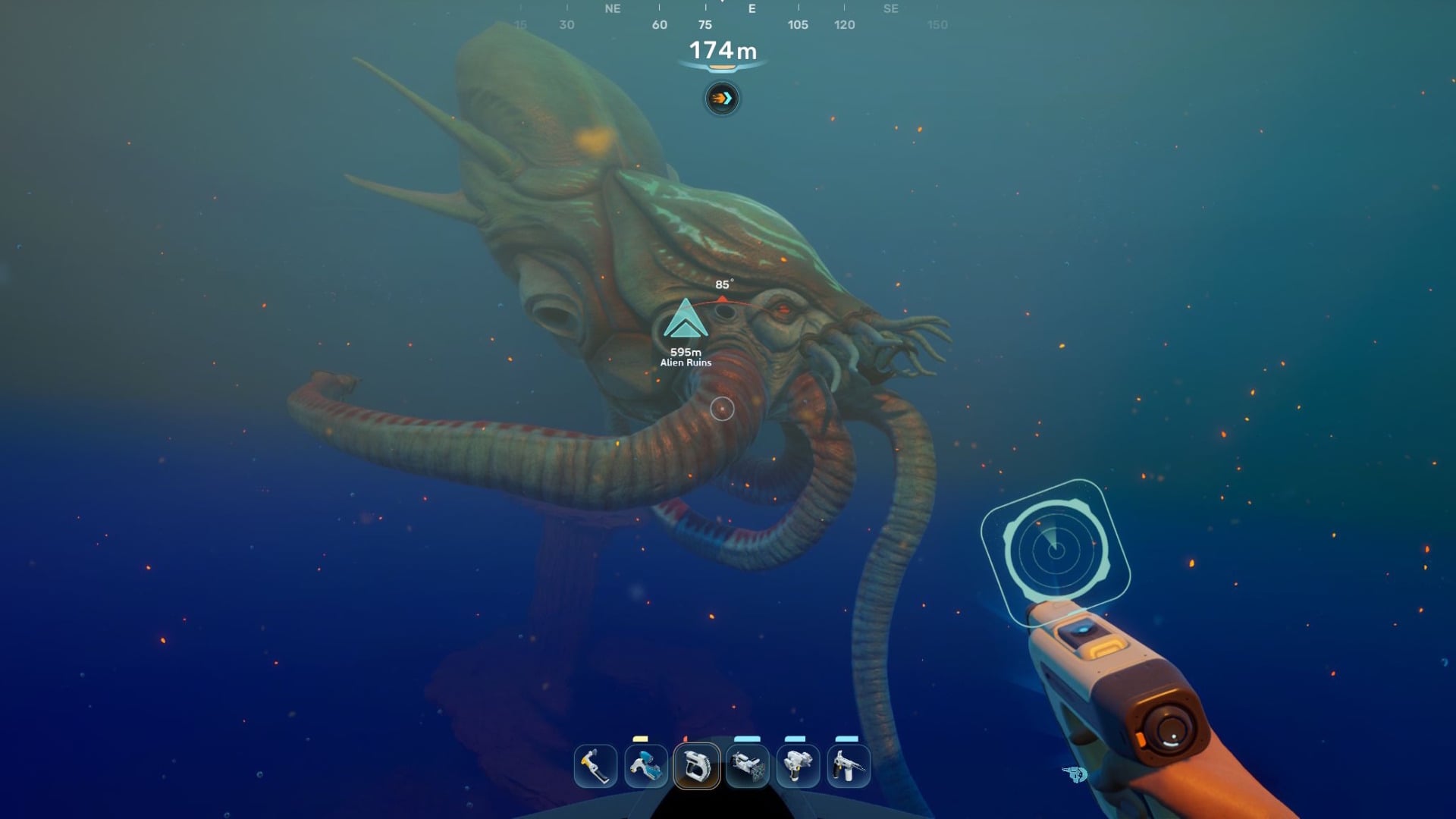
I am, however, still only a way into what’s already in place in an already very deep build. I shall return in a few days with a more fulsome review of everything that’s here, including the events of around eight or so hours in and onward once that’s no longer just abject spoiler territory. In the meantime, for as much as I’ve complained, I’ve also had plenty of good, solid fun in Subnautica 2‘s earliest form. It’s not the game I was hoping for, and it’s time to shake that off and move on. As for whether you want to wait, or jump in at this earliest stage, I’d say jump in. The first and final versions of Subnautica were such hugely different experiences, and I loved both extremes. I’m very hopeful this will be very much the same. Except if only it would just shhhhhhhh.
About the Author


