
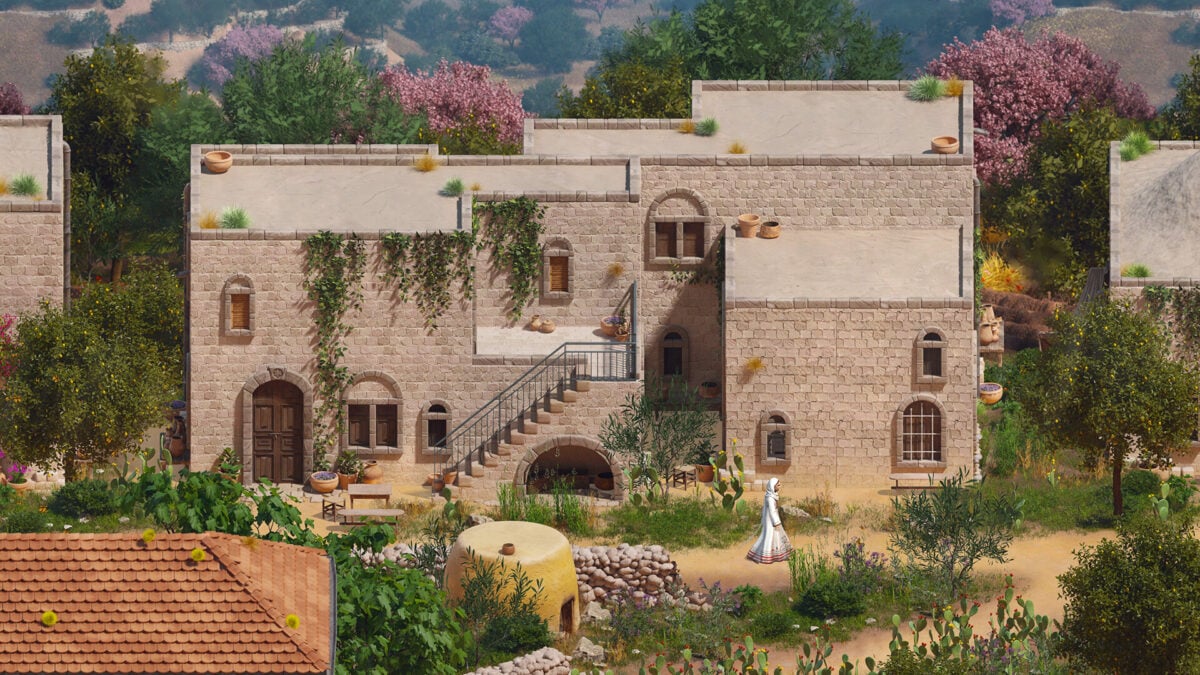
When you imagine Palestine, what does it look like in your mind? Does it look like the photographs we see in the news all the time? Do you see abandoned buildings and piles of rubble? Rocky, barren land? Exhausted individuals standing in long lines for humanitarian aid? The injured, the sick? The dead?
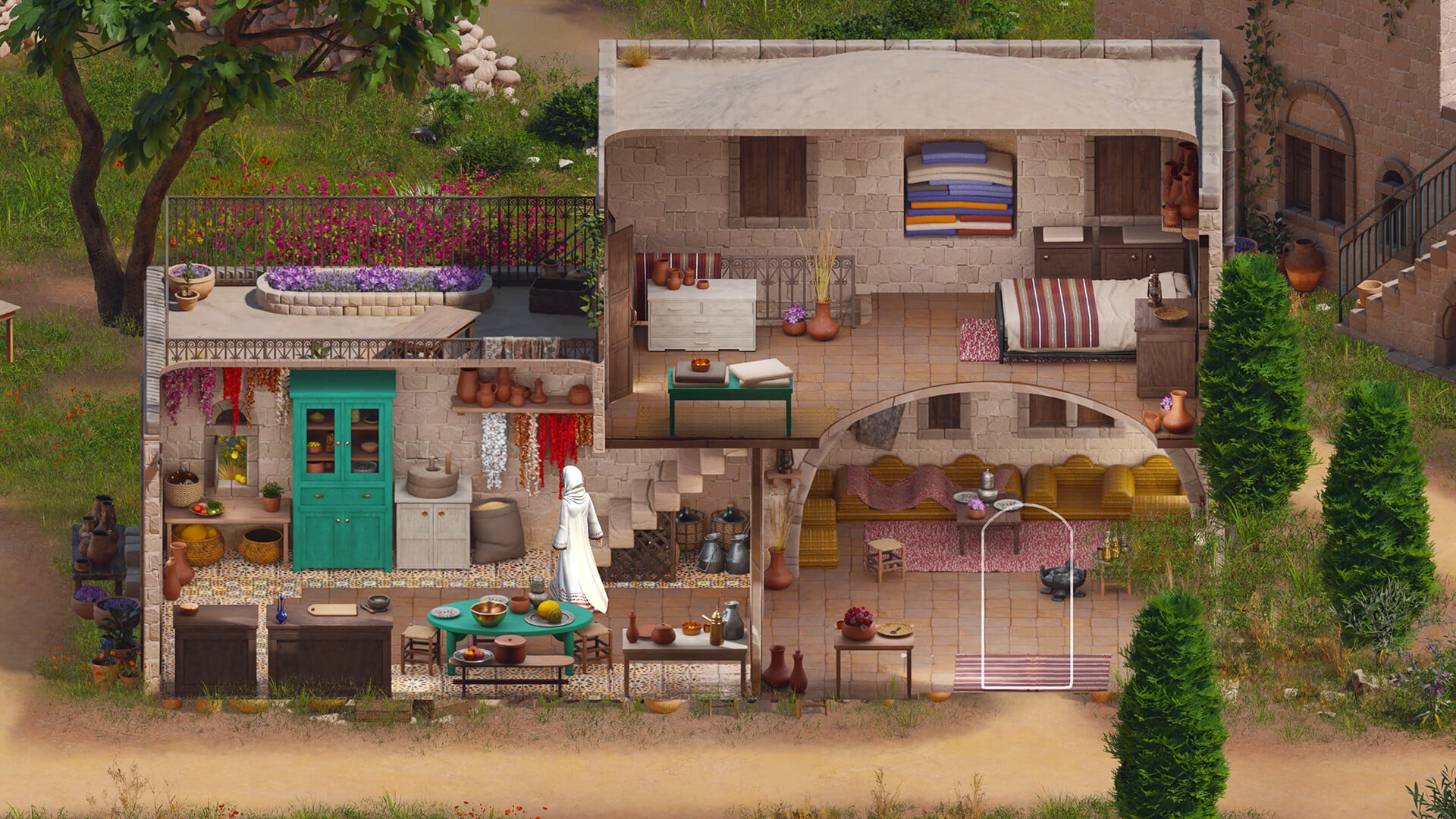
Or could you imagine a different Palestine, one with lush gardens and flowering trees? Could there be colorful handmade crafts? Plates of delicious food? Clear rushing water? What about community; what about neighborhoods and towns where people gather cheerfully for meals, celebrations, or just because?
There’s a vision of Palestine, a real historical one, that Palestinian game designer Rasheed Abueideh wants to share with the world, even though (perhaps especially because) few people alive have laid eyes on it. That’s because it existed nearly 80 years ago, prior to the 1948 Nakba that saw an estimated 750,000 Palestinians banished from their homes in the region by Zionist paramilitary groups, never to return. In the years since, it’s grown more and more difficult to picture what a normal life might have looked like there, both due to the simple passage of time but also to the endless onslaught of news photographs and videos depicting the impacts of ongoing war and devastation.
But Abueideh hopes that by showing what used to be, in video game form, we can come to better understand what’s happening there now: the origins of the ongoing conflict, the life that Palestinians lead there today, why Palestinians long to return to a homeland many of them have never seen, and why individuals like himself refuse to leave in spite of everything.
Abueideh is the creative director for Dreams on a Pillow, a game about a Palestinian woman fleeing the 1948 Nakba, and the trauma inflicted on her throughout the experience. Abueideh is making it while residing in Nablus, in the West Bank of Palestine, which has been occupied by Israel since the 1960s. As a result of the ongoing occupation, Abueideh tells me that there’s really no way to have a “games industry” within Palestine. Game development requires a lot of trial and error, he says, which in turn requires a level of security and stability that he does not have. There’s no “luxury of failure,” as he calls it. “Living under occupation is a daily struggle,” he says. “Just to survive is a hassle by itself, so providing for you and your family and just running through your day is a struggle that you think of minute by minute. So it turned out that making games is not a thing that I can [make a living] with, or I can build a career in, so my life turned in a different direction.”
Abueideh has provided for his family (he has six sons!) through various means over the years, and in between, he did eventually find a way to get into game development. In 2016, he released a free game for mobile and PC called Liyla and the Shadows of War, about the 2014 Gaza War, which was initially rejected by Apple for its App Store before the decision was rescinded just a few days later after a public outcry. Again, Abueideh couldn’t remain in games due to the need to support his family, so he didn’t make anything else for several years.
“I tried to build my own company,” he says. “The economy is bad here; we don’t have an independent economy in Palestine. Everything is tied to the occupation. If you choose to live inside Palestine, it’s not that easy to build a startup or to run a successful tech company that reaches millions, because we have a very small market inside and we don’t have exposure to outside, so if I want to build something that is actually impactful in the world, you have to be somewhere else, not in Palestine.”
Then, on October 7, 2023, Hamas and other militant groups attacked Israel, killing 1,195 and taking hundreds of hostages. In response, Israel launched its current war on Gaza, which has thus far killed an estimated 75,000, though many international groups believe the actual number is significantly higher. A number of world governments and groups have dubbed the Gaza war a genocide.
In the wake of these events, Abueideh once again found himself wanting to contribute to a wider and more thorough understanding of how and why this was all taking place. “You always hear that it is complicated,” he says, referring to a common response to the Gaza war and the Palestinian genocide. Hence, Dreams on a Pillow. Abueideh wants to explore what he defines as the “root cause” of what’s happening in Palestine now through his game, and in the process offer a window into what was lost during the Nakba itself and in the years since.
Dreams on a Pillow is a retelling of a Palestinian story stemming from the Nakba, of a Palestinian mother whose village is attacked by Zionist gangs. Her husband is killed; her house bombed. She rushes back into the house to grab her child and flee the town, but in the chaos, she grabs a pillow instead of the baby, and doesn’t realize her mistake until it’s far too late to go back.
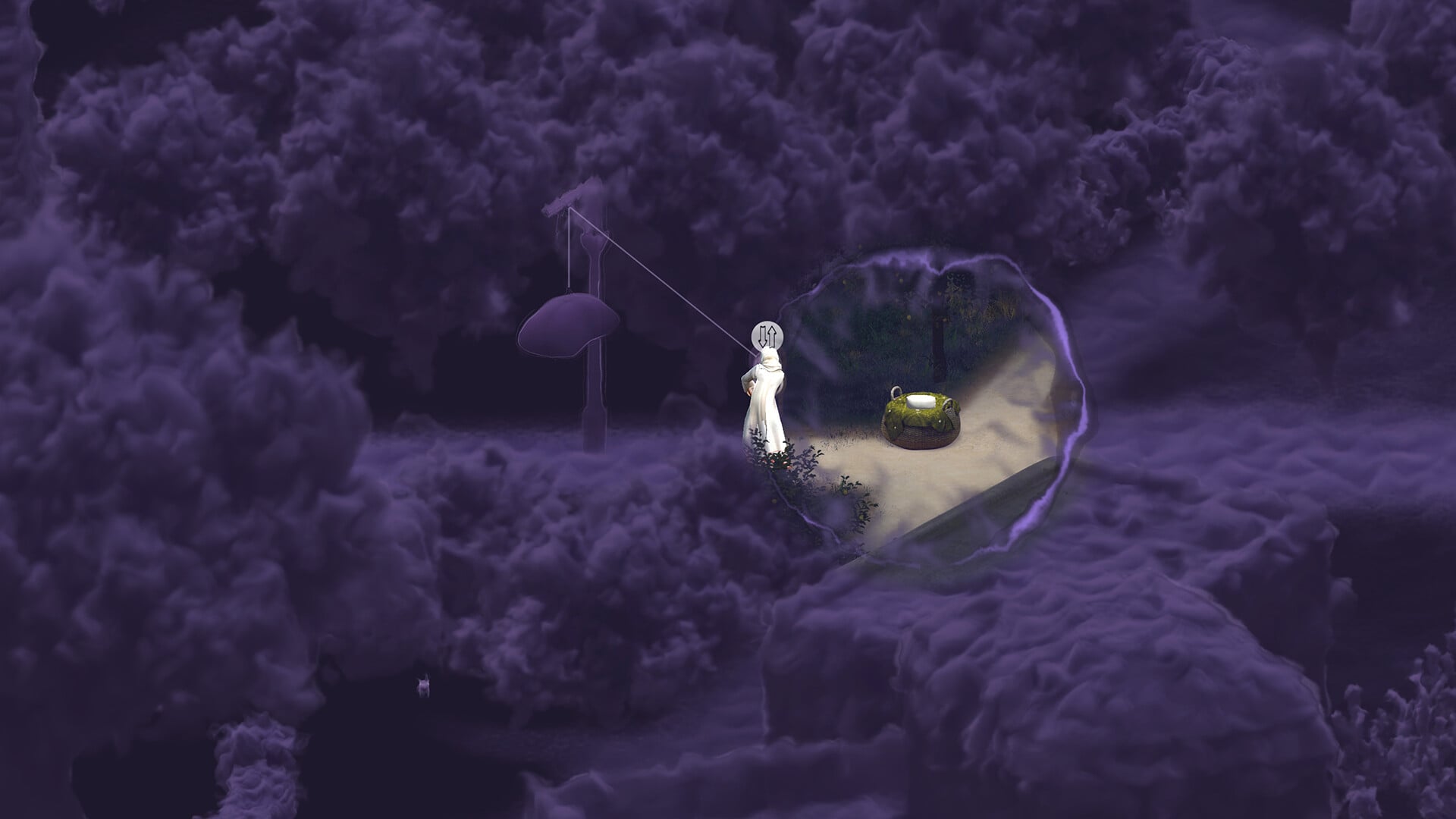
In Dreams on a Pillow, the mother is named Omm, and the bulk of the game follows her flight into Lebanon, still clinging to the pillow which, in the midst of her trauma, she views as actually her child. In these sections of the game, Omm must avoid attacking soldiers and bombs while traveling on foot. She often has to interact with the environment to proceed, but in doing so must set down her pillow, which causes hallucinations and nightmares to torment her and make it even more difficult to move forward until she has returned to the “child.” “Through her eyes, we’re talking about what happened during the Nakba and the psychological impact of the Nakba on her and also on the collective Palestinian community, which is like a trauma that was inherited through generations,” Abueideh explains.
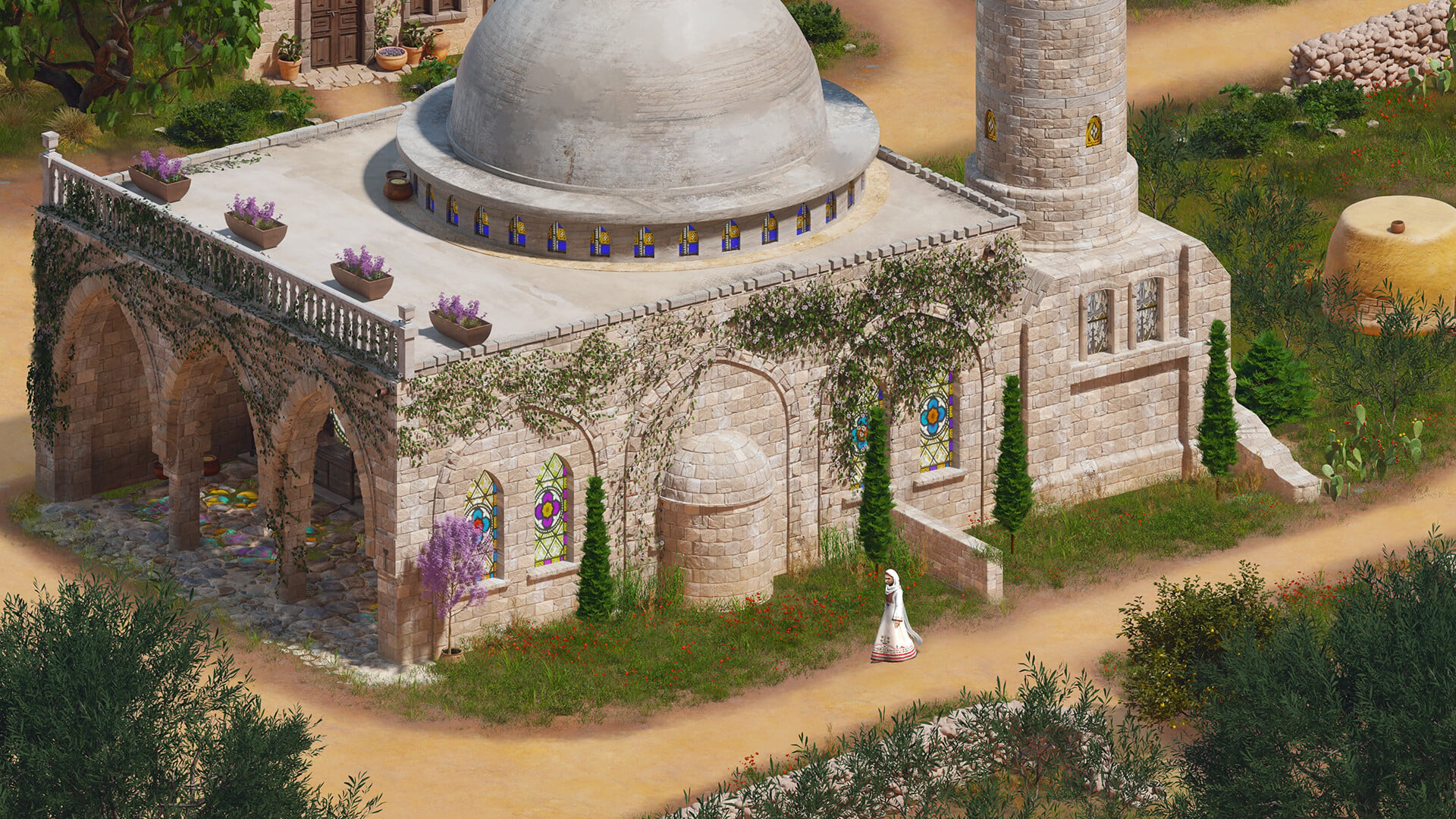
But in other sections of the game, we see flashbacks to Omm’s childhood in Tantura, portrayed in vivid color in contrast to the darker sections of her present day. Abueideh has talked about the game’s structure before, but Dreams on a Pillow got its very first gameplay trailer just last week, and it makes the contrast between the two types of gameplay even more apparent. “We wanted to talk about Palestine, which is a land full of people, not ‘a land without people for a people without land,’” he says. “We needed to show the beauty of Palestine, the culture, the history, all of that, the beauty in her town and to show the contrast between what happened after the Nakba and what was her life before 1948.”
Abueideh points out to me that in the present day, Tantura no longer exists. The place where it was is now a tourist resort, and a number of Palestinians and advocates have claimed a mass grave still exists there, now paved over for a beachside parking lot.
Dreams on a Pillow was first announced in 2024 alongside a crowdfunding campaign on LaunchGood, which raised $244,000 in its first round. He’s since launched a second campaign aiming to raise $400,000, though at the time this piece was written it had pulled in just over $41,000. With the money raised so far, Abueideh has been able to assemble a team—some full time, some contract, and even some volunteers—to make significant progress. He tells me they’ve essentially built all the tools, pipelines, and foundations for all parts of the game, as well as characters, the actual setting of Tantura, and a narrative system. Put simply, it’s out of pre-production and into production. Barring any major stumbling blocks, Abueideh says there’s about 18 months left of work to do, though he acknowledges that could change very quickly given the nature of the game. “The scope is locked. We know what we have to do. There’s no more research. It’s just execution right now.”
Through all this work, Abueideh and his family remain in Palestine, in fear that at some point his work on and publicity for Dreams on a Pillow could result in some sort of retribution. It’s for that reason that he won’t name any of the collaborators working on it with him. “I don’t think there is a game developer that can imagine the stress that I’m living in because of this game,” he says. “Like, you know, game development is hard, you have all sorts of stress, either it’s timeline, budget, scope, all of these…Being in that position and seeing many of your friends are being taken, detained, just for no reason, it raises the question like, is it worth it to make this here? Can you do it somewhere else? So I can’t really describe the struggle that I’m in right now.
“I’m not sure if it is good to talk about it in [the] media or not, to be honest. Even the campaign itself, it’s like a suicide mission, you know? I’m getting more spotlight. I don’t want to be in the spotlight. I wish I had enough funding to work in the background and boom, this is the game. This is what I made with the first game, Layla and the Shadows of War. It was something that I worked for years without telling anyone about it, unless another two volunteers were working with me and my wife, so it was less stressful. But nowadays, with getting attention, it is a different level of stress and anxiety. Sometimes I don’t sleep at night. Sometimes I just jump from my bed because of what’s happening around me.”
I ask Abueideh if he ever considered leaving Palestine. He immediately says, “No,” then pauses for several seconds before continuing:
“It’s a tough question. Definitely no, but you have all of these thoughts about where to raise your children, is it safe or is it not? So you have all of these internal struggles that you think of, which is to find something at least peaceful for your family. But it is what they want you to feel, and this is what they want you to do, is to leave the country. Right now when I go in the streets, there are literally billboards by settlers and Israelis around the West Bank that say, ‘No future in Palestine.’ You’re like, seeing a commercial that you should leave, right? So that by itself, it creates, I don’t know, like maybe more, for me, I insist more to stay because it’s what they want. They want Palestine without the Palestinians. They want to take all over the land and I’m gonna stay, regardless of the risk that is here for me or for my family.”
About the Author


