

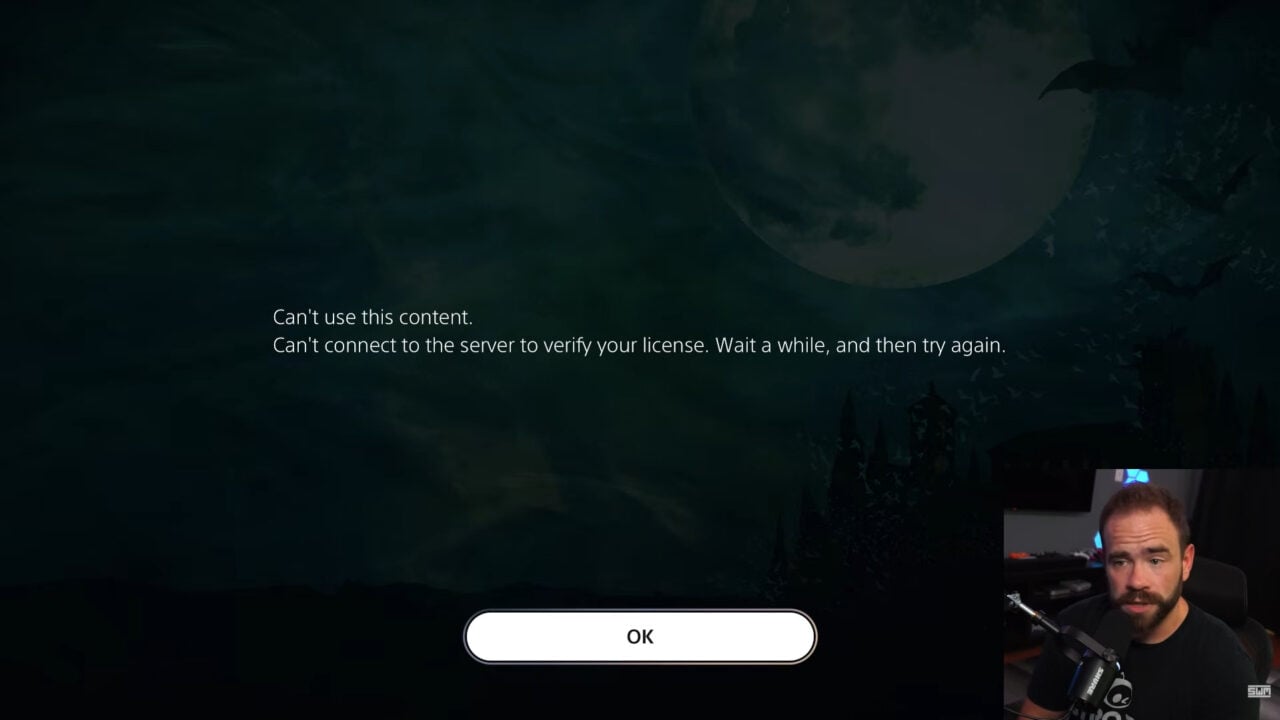
Over the weekend, several reports started popping up online about a newly implemented DRM (Digital Rights Management) system on PlayStation 5 and PlayStation 4 consoles. According to those who have been testing the DRM tech over the past few days, those who are running the latest PS4 and PS5 firmware updates now have to connect their systems to the internet every 30 days to verify the licenses for their latest digital purchases.
Kotaku covered this story on April 25, and back then, people were understandably upset. However, in the past three days, the story has developed somewhat, though Sony still hasn’t released any kind of official statement to clarify matters. As a result, users online have turned to PlayStation Support for answers, which has somehow only resulted in further confusion.
What We Already Knew
Just as a quick refresher, this story started spreading after content creator Modded Hardware covered the issue on April 24. As he explained, digital games purchased after a specific date in March now come with a 30-day expiry date. If you remain offline for 30 days, you will no longer be able to access digital PlayStation games you purchased without connecting to the internet to verify your licenses.
Hugely terrible DRM has now been rolled out to all PS4 and PS5 digital games. Every digital game you buy now requires an online check-in every 30 days. If you buy a digital game and don’t connect your console to the internet for 30 days, your license will be removed. pic.twitter.com/23gU16CIkx
— Lance McDonald (@manfightdragon) April 25, 2026
The story then truly started to pick up steam following Lance McDonald’s post on X the next day. As a result, the video game preservationist group DoesItPlay launched its own investigation into the story, and later concluded in a separate post on X that the DRM issue was an “unintentional” mistake on Sony’s end.
Destruction Games, one of DoesItPlay’s members, then ran a test of its own by removing the CMOS battery from a PlayStation 4 (which allows the console’s motherboard to retain accurate real-time settings) and concluded that the issue wasn’t a simple visual bug, as many had assumed. Whether it was intentionally implemented or not, the PlayStation DRM system appears to be very real.
What We Know Now
As Sony has yet to comment on the DRM issue, those who are desperate for answers have resorted to asking PlayStation Support for clarification. In one example, posted by a user on X, PlayStation Support seemingly confirmed that the “30-Day Timer” has been implemented intentionally. However, while the reply does indeed seem to be from the PlayStation Online Support chat, it also appears to be AI-generated.
Thankfully, one user did get through to a real “agent” through PlayStation Support. Here’s what the agent had to say: “At this time, there is no requirement for players to re-authenticate their digital purchases every 30 days. If you bought a digital game in late March, you will still be able to access and play your game normally, even after 30 days have passed.”
Sweet, problem solved. The DRM doesn’t actually do anything, so we can all move on, right? Well, uh—no, because…we have direct evidence to the contrary. Other users have followed in Destruction Games’ stead and tested the DRM, like, for instance, content creator Spawn Wave.
In Spawn Wave’s video, he removes the CMOS battery on a PlayStation 5 and attempts to boot two digital games that he purchased this month: Saint Slayer: Spear of Sacrilege and Vampire Crawlers. Both times, he’s greeted with an error message stating “Can’t use this content. Can’t connect to the server to verify your license. Wait a while, and then try again.”
What We Don’t Know
So, there are three solid pieces of info we can take away from all this: PlayStation Support doesn’t understand what’s going on, Sony has yet to make an official statement (or reply to requests for comment from journalists), and, yes, whether intentional or not, a DRM system is in place on both PlayStation 4 and PlayStation 5 systems following the latest firmware updates.
To that end, I reached out to DoesItPlay to ask about their initial post on April 25, in which they stated that an inside source revealed that the DRM was implemented unintentionally. They were kind enough to reply and clarify the situation somewhat.
“What I can say is that we were shown internal info that gives details about the situation. It is a layered thing, though. And our source also isn’t involved deep enough to know any outcomes,” replied DoesItPlay’s owner, Clemens Istel. “The way we understand it currently is that there was an additional layer of DRM introduced to combat fraudulent behaviour from users. Our best guess is that this might have to do with a refund scam we’ve heard about. It might also be about the recently reported exploit surrounding the Star Wars Racer game.”
“We don’t know for sure what it is they are trying to prevent. It’s just a guess. So the first license expiring is intentional, but the way it is displayed for the user is not,” Istel continued. “Our info points to this being an under-the-hood thing that users should never see or feel. The first license is supposed to turn into a second, unlimited one. It is currently unclear whether this happens automatically or has to be done through another online check. Among the many uncertainties is that we don’t know if Sony expected people to just be online anyway so players wouldn’t realize an additional online check.”
Kotaku has reached out to Sony for comment again.
About the Author


