

I often find the way we rampantly compare video games to other games and use terms like “Souls-like” contrived, but boy, it is nearly impossible to look at The Blood of Dawnwalker and not see The Witcher. You get quests where you use your “sense” to follow glowing tracks, you open the menu and read a note to learn how to make a potion, and you even use a necromantic spell to speak to the dead. Dawnwalker isn’t shy about where it comes from—and it makes sense considering developer Rebel Wolves was founded by The Witcher 3: Wild Hunt director Konrad Tomaszkiewicz. After all, these things seldom happen by coincidence.
“I’m going to paraphrase Konrad here. He’s a game director, and if you try to draw the parallel between game direction and movie direction, people have certain inclinations, and ways they like to do things,” says senior quest designer Patryk Fijalkowski. “When you see a Quentin Tarantino movie, you know what you’re going into—you know what themes he’s going to be writing about, what kind of goal to expect. I think it’s very similar with Konrad.”
Because of that, the team at Rebel Wolves seems to relish the comparisons. But after five hours of playtime, I walked away remarkably impressed at how Dawnwalker doesn’t just want to emulate The Witcher, but genuinely push its design ideals and systems forward—driving that point home with a fantastic opening that’s absolutely drenched in vampiric world-building and one truly remarkable, potentially game-changing feature.
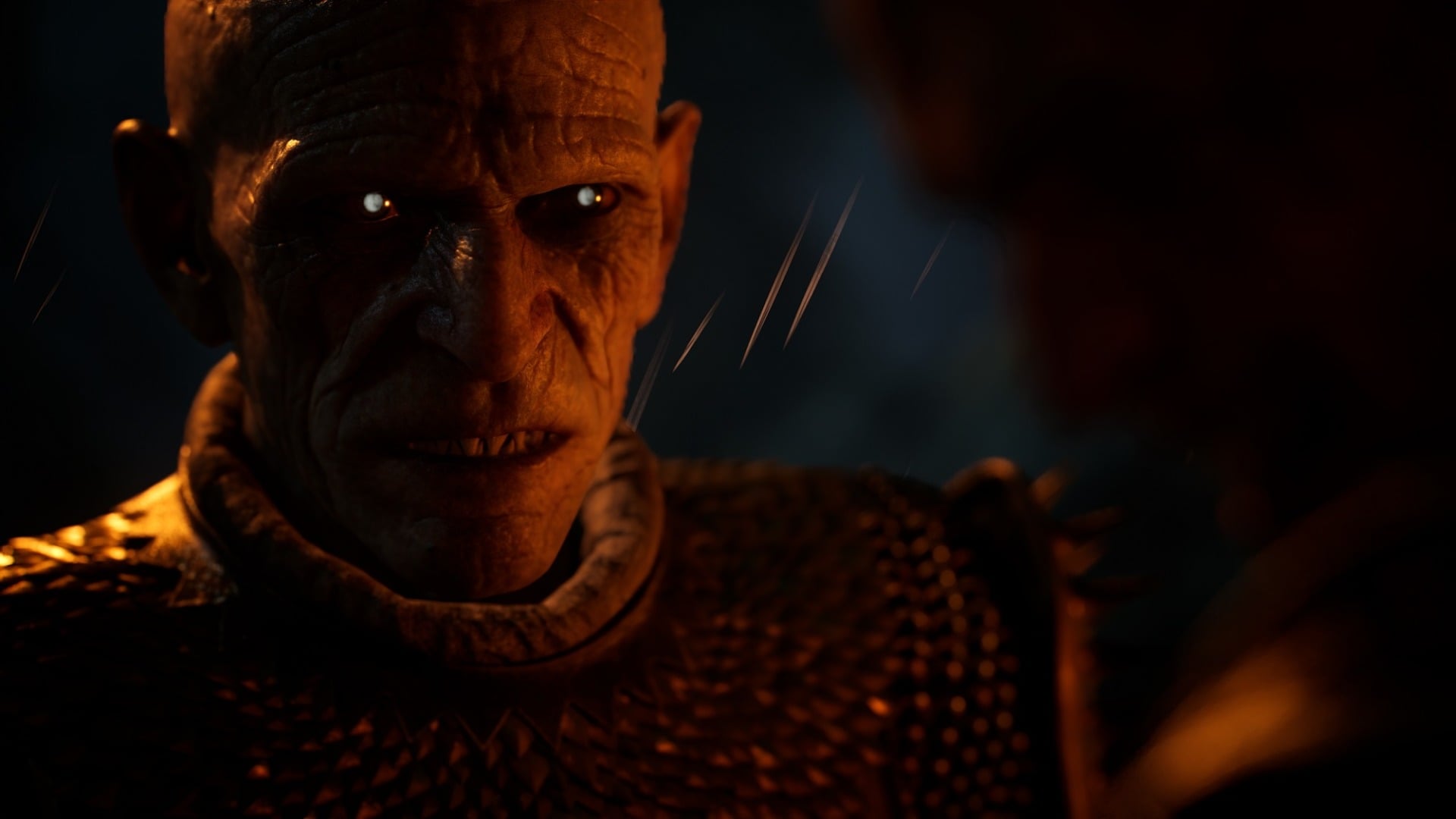
Dawnwalker takes place in a fictional 14th-century kingdom called Vale Sangora, following the story of a young man named Coen, who’s had to step into the role of his family’s provider after his mother became sick. The kingdom has been taken over and put under the rule of an ancient vampire named Brencis, who regularly demands a “blood tax” from the villages of the kingdom, forcing villagers to give up their own blood as payment, while drinking that of the vampires.
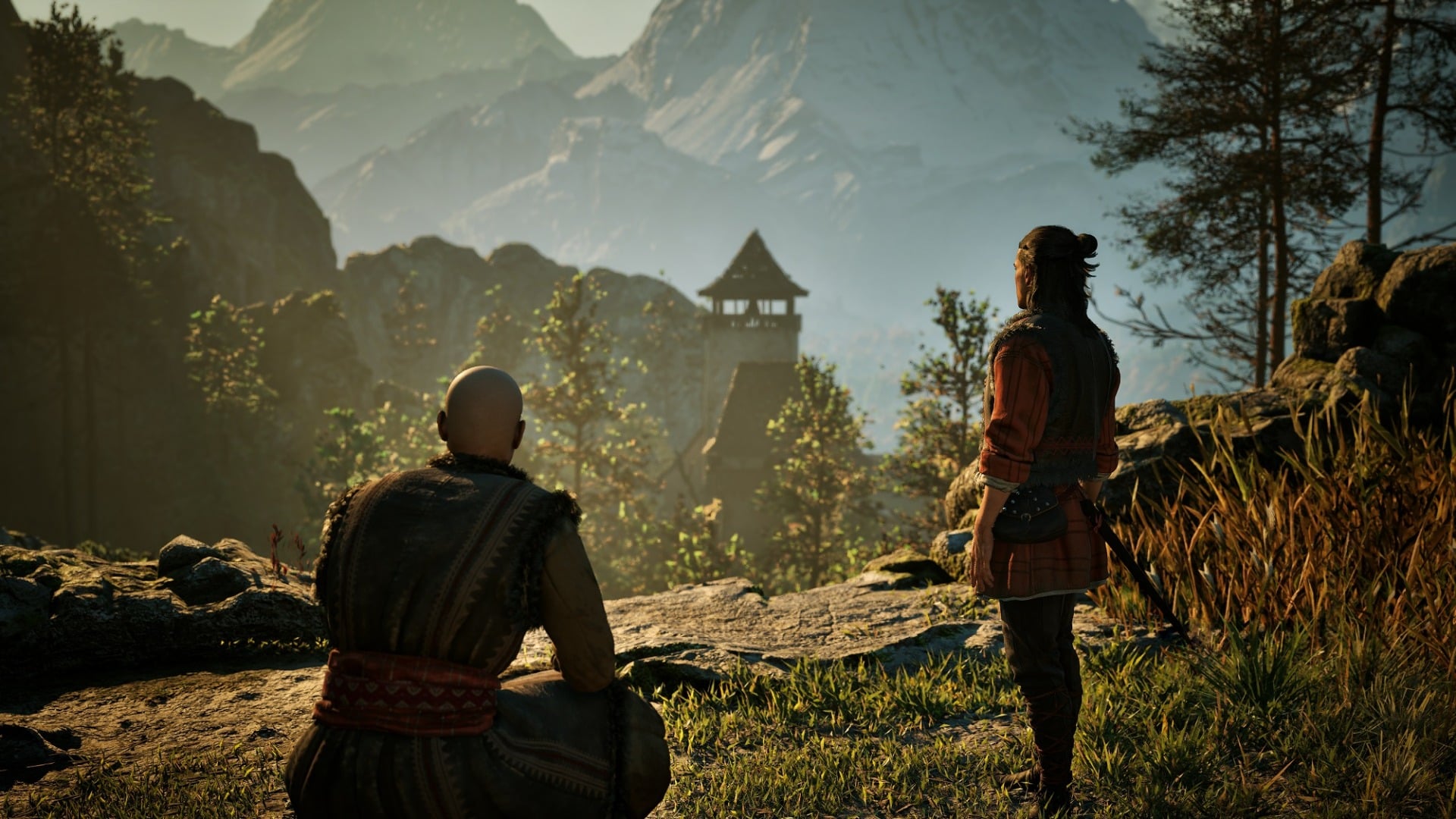
It almost goes without saying that Dawnwalker is a heavily story-based RPG, and that narrative emphasis becomes abundantly clear in the game’s first five hours. There were essentially halves to my demo, a slowly plotted and narrative-heavy opening section, followed by a couple of hours let loose into the open world, after Coen had been turned into a vampire.
After a nightmarish opening where Coen’s sister is turned into a vampire, he awakens in a sweat, questioning if the entire thing was real or not. The next few hours see Coen tasked with talking to the local healer to prepare medicine for his sickly mother, while the town itself prepares on pins and needles for the next blood ritual.
There’s a metric ton of lore and set dressing to dig into here, and I could easily see myself taking double the time to explore if I’d had it. And according to the team, there’s an intentionality behind this world feeling like something larger.
“A lot of the heavy lifting was done by Jaco Tramowicz, the writer, who wrote a sort of lore bible. He didn’t just write the story of what’s happening in the game; he wrote thousands of years of history, “ says Fijalkowski, “Out of that history grows things like how vampires are made. The 1300s, where the game takes place, are absolutely not the roots of the vampiric lore in our game, it goes way deeper, and we’ll be showing you more about it from the perspective of the vampires.”
That slow, methodical opening also paints a strong picture of Coen as a protagonist, a headstrong but kind young man forced into an impossible situation—and sometimes struggling to retain his morals in the face of his family’s safety. The biggest surprise of my playtime might have actually been just how much I like Coen as a character. He treads that same fine line as Geralt or Mass Effect’s Commander Shepard, where he is a defined character with his own ideas, but there’s some flexibility in how that plays out. That’s also supported by some genuinely phenomenal voice acting for Coen, painting a real sense of both his personality and his inherent insecurity.
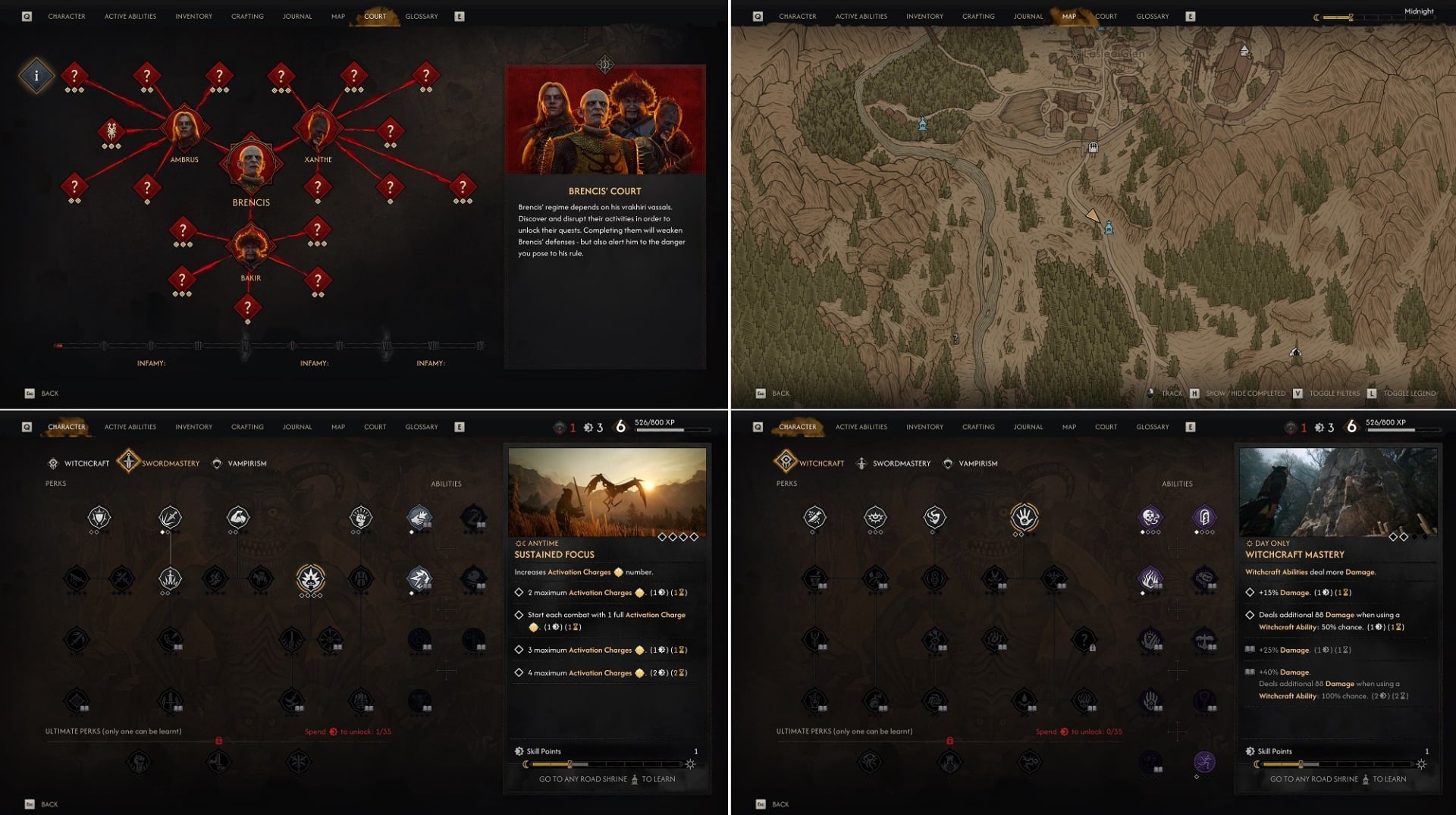
But the most fascinating element of Dawnwalker, by far, is its time limit system, which dictates the entire structure of the game. Essentially, every quest in the game, as well as major side activities and investing in skills, will pass the time. As time progresses, quests and storylines can be locked off, but the game won’t ever have a fail state—it adapts to your choices and keeps going. Time also doesn’t pass by itself, so you’re not actually on a “timer.” You can explore and wander at your leisure, but the crucial decisions you make pass time.
It’s an intriguing way to up the stakes even more on the decision-heavy narrative of something like The Witcher. In CD Projekt’s games you’re often guesstimating on the right choice; how it will affect the characters at hand, the morality of it, and the information you don’t know. All those elements are present in Dawnwalker, but the time system gives them added weight—and further, I think it’s a really smart choice to make decisions pass time, and not have an inherent clock ticking down. It emphasizes the narrative weight of things without adding a needless pain point to the overall game.
The opening section of the game is an introduction to this idea, giving you one day, roughly six or so activities, before the blood ritual happens. You can choose to make your mother’s medicine at that time, or not, and get completely wrapped up in side quests. But what’s really interesting is how the various options help mold how the story plays out.
I talked to multiple other previewers who saw drastically different quests from me. I was one of the only people to find a quest about a graverobber, which then yielded info on one of the village’s men stealing silver to fight back against the vampiric overlords—something that gave me important info for a major plot beat later on. Meanwhile, others followed a questline to restore a tapestry, which ended up being a piece of worship to the vampires, much to people’s chagrin. In preparing your mother’s medicine, you even have to open the menu and make sure you’ve read the recipe and follow the right steps—and if you don’t, she’ll become more agitated during the blood ritual.
As you might expect, when the time finally comes, the blood ritual goes quite badly, and Brencis decides to “teach” the village a lesson. Based on the choices you’ve made, Coen’s mother might be killed (in a genuinely gut-wrenching and horrifying scene), or she’s kidnapped along with the rest of the family. I don’t need to belabor plot points, so Coen is turned into a vampire and learns he has 33 days to save his family—and from then on, you’re unleashed into the world.
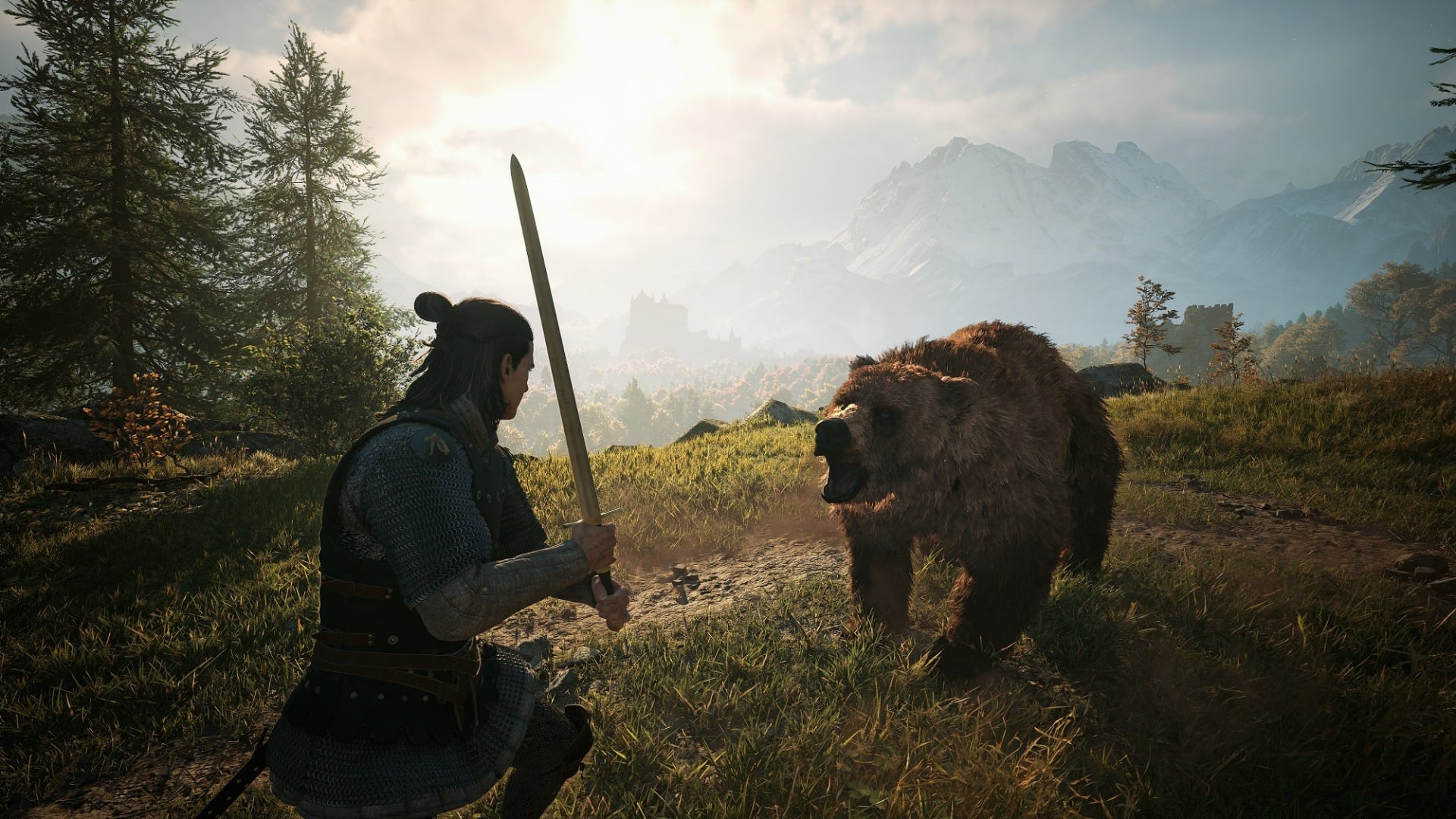
From here, the time system becomes even more crucial, as it’s entirely up to you how to progress, build Coen’s new powers, and recruit allies to take out Brencis. But the developers also clarify that the game won’t stop if you don’t save your family—the story carries on.
But that time system also plays into the day-night cycle, again because time only passes when you make decisions. But Coen is a much different being at those times, human during the day, but vampiric, with all the related powers, at night. This means combat is different, the way people interact with you is different, and the way you traverse the world is different. At night you can use Shadowstep to teleport across short distances, or drain the blood of enemies in combat to restore health. You can even feast on wildlife; I got a real kick out of Coen lunging onto rats and maniacally feasting on them. Meanwhile, people might be more willing to talk to you during the day, and you can use your stocks of food to restore health, not just blood.
There’s an extra system I was keen to learn more about called “Blood Craving,” where if Coen’s health drops below a certain level at night, he’ll be forced to feast on the nearest human, and yes, that can even include allies.
“We wanted to really evoke this feeling of being a vampire, and the craving is part of that. We wanted to go all-in, and that means some design challenges, because, yes, you can drink your biggest ally if you aren’t careful, and they’ll be dead, someone may not like it, and some quests may end,” says Fijalkowski, “It was like a puzzle to solve—what happens if we really kill this character, if someone accidentally goes to have this conversation hungry. At first it was a headache, lots of headaches, but then it works, yeah you can kill him and the story will unfold. It doesn’t break the game and the fantasy is fulfilled.”
Environment artist Adam Payet adds to this by saying he finally understands what it must be like to develop a Dark Souls game, with DLC that a massive portion of players won’t see.
“There are characters that, if you kill them, you will not see entire hours of content that I’ve worked months on,” says Payet, “Which to me is equal parts awesome, because I want people to have that experience, and also parts of like, not everyone will see the thing I love so much. But I think that’s the beauty of working in game dev, is that it’s so malleable and unique in how people experience it.”
While those narrative systems are endlessly fascinating to me, I feel like I’ve barely scratched the surface of Dawnwalker; there were a handful of extra elements that I could only glimpse. The main menu has a massive tab called “Court,” revealing a massive web of vampires for you to hunt down, looking almost exactly like the Order of Ancients’ feature from Assassin’s Creed.
Combat, strangely, feels a lot like the very first Witcher game with how it emphasizes combos and timing, but it also implements a For Honor-esque directional system for your attacks and parries (although that feature can be turned off). And while combat initially feels uneven, once you reach the open world and start unlocking abilities and extra weapons, it grows tremendously. An ability during the day lets me throw sand in enemies’ eyes to momentarily stun them, while at night I could use my vampiric claws to absolutely shred foes.
That duality is central to everything in Dawnwalker, from both a mechanical and a narrative perspective. Coen has to grapple with his new vampiric reality and whether he can maintain his humanity, while the player has to shift how they play based on the time of day. And according to Fijalkowski, that sense of duality was the “core idea” of the game. Dawnwalker really sprouted from the idea of Coen as a character and that juxtaposition of two natures.
It’s abundantly clear that Dawnwalker is an ambitious game, filled with idiosyncratic ideas, even while it tries to emulate a lot of what made The Witcher 3 so special. There are, of course, plenty of question marks still there—if the combat might grow stale, how demanding the time limit might actually be, and how the game achieves narrative weight with seemingly so much variance in how you can approach the story.
But it’s particularly striking, after all these years, to finally see a game trying to not just emulate The Witcher 3’s formula, but do something new with it. The ideas at the heart of The Blood of Dawnwalker are riveting, but the proof will be in the execution.
About the Author


