

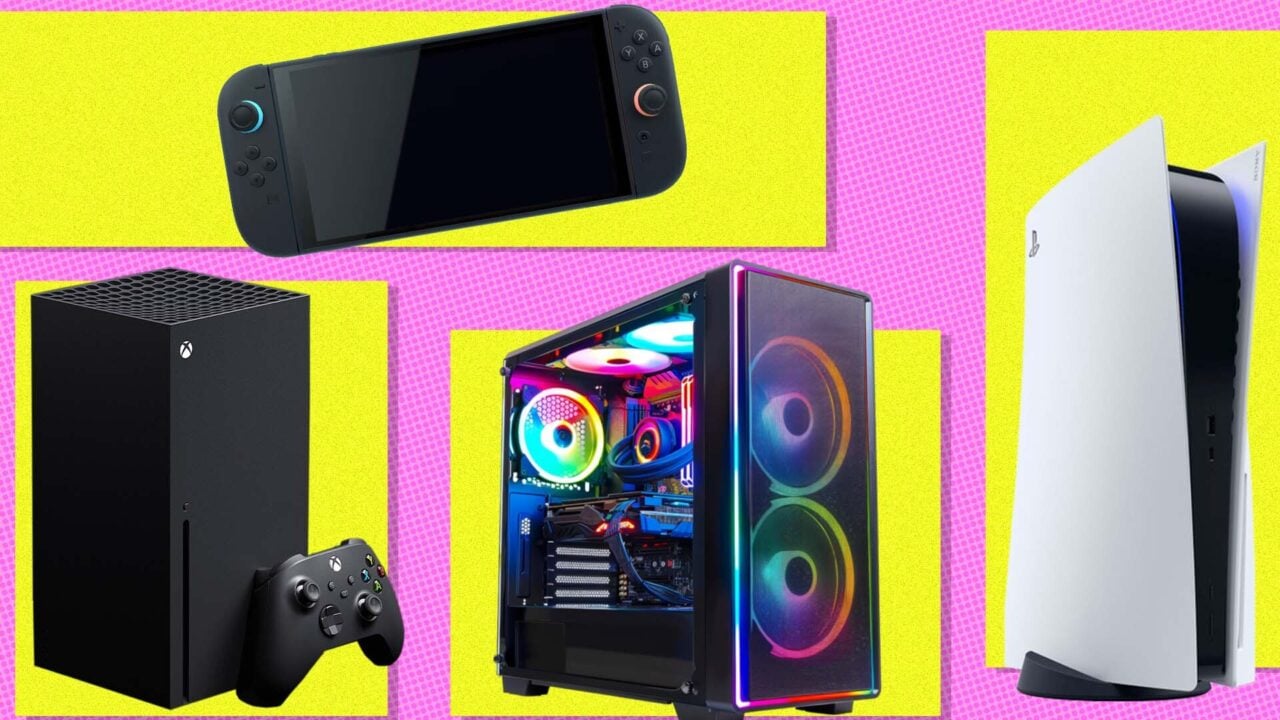
Last week, Valve sent the price of its Steam Deck into the stratosphere, increasing the cost of both versions of its device by over $200 apiece and leading to widespread concern over how many other hardware dominoes this move is going to knock over. Meanwhile the Switch 2 is already getting a small price hike later this year, the cost of an Xbox has already gone up multiple times in the U.S., and PS5s have gone up globally multiple times too. And of course this is happening amid everything else—groceries, gas, housing, everything—climbing in price even as wages stagnate. Tough time to be alive generally, and also not a cheap time to like video games.
Will things get better? If so, will they get worse before that happens? Well, I could sit here and uselessly opine on the internet, or I could do one of my favorite things and ask a roundtable of games industry analysts about why this is happening, whether or not things will improve, and what it all means for video games:
Why is everything so much more expensive?
You’ve probably heard that the reason gaming hardware prices are shooting through the ceiling right now is because of the RAM crisis, brought about largely by companies suddenly buying up stupid amounts of RAM to power AI data centers and hogging all the supply for the next several years. That analysis is largely correct. But sometimes it’s good to confirm what we’ve sort of loosely heard on social media with someone who knows what they’re talking about, so here’s Joost van Dreunen, NYU Stern professor and author of SuperJoost Playlist, on that:
“The rising cost of RAM is the main culprit, but the inconsistency and volatility created by U.S. tariffs aren’t helping either. Downstream suppliers and manufacturers now sit on massive amounts of inventory they cannot sell or assemble because few consumers would be willing to pay for the markup. What was supposed to bring manufacturing jobs to the U.S. has instead priced consumers out of the market and pushed manufacturing jobs to lower wage countries.”
Dr. Serkan Toto, CEO of consultancy Kantan Games, backed up van Dreunen’s statement, adding in “persistent inflation worldwide” and “geopolitical turmoil like the Iran war” as additional reasons for the situation we find ourselves in. Daniel Ahmad, director of research and insights at Niko Partners, added “currency fluctuations” in addition to everything else, but also pointed out that, as many of the listed issues are somewhat U.S.- or Western-centric, the markets Niko Partners covers are in better shape than most.
“The Asia and MENA games market continues to demonstrate resilience and long-term growth potential amid ongoing geopolitical uncertainty, shifting trade policies, and broader economic volatility impacting industries worldwide,” he says. “Asia & MENA countries will continue to outpace worldwide video game software and services growth through 2030 according to our forecast and global estimates.”
Are hardware prices done rising?
No.
Every analyst I spoke to said that gaming hardware costs were only going to keep rising, with most analysts giving an estimate of somewhere between 2027 and 2029 before prices began to ease, if they eased at all. As Rhys Elliott, head of market analysis at Alinea Analytics, explains, “The increases happening now are lagging indicators, not the peak. Platform holders and manufacturers run on long-term supply contracts and inventory buffers that initially shielded retail pricing. As those contracts expire, companies are renegotiating component costs at today’s inflated rate, and that pressure is industry-wide.”
And there doesn’t seem to be a definitive ceiling for these prices. Elliott continues, saying that pricier hardware is only an issue for platform holders “when it chokes off a pipeline of new, spending users. And right now, that pipeline is still healthy. [PlayStation and Steam’s] ecosystems are still growing, and the PS5 generation will also be extended by a long cycle of cross-generation games.”
It’s a little different for handheld gaming, though, especially with Nintendo just having entered a new console cycle. “While console manufacturers can and will continue to subsidize the cost of their hardware, components costs continue to rise faster than the rate by which they are subsidizing – this is especially true for Nintendo,” says James McWhirter, senior analyst at Omdia. “We expect further increases to the price of Switch 2 in 2027.”
Mat Piscatella, senior director at Circana, says there is a price ceiling. It’s just that no one will really know what it is until someone hits it. “Some very tough choices with long-ranging impact will have to be made by all hardware manufacturers both now and in the coming months when it comes to pricing and production,” he says. “Yes, at some point there is a viable price cap. What that cap is, however, is still a bit of a mystery, and dependent upon numerous factors, both quantifiable and not so much. This market has never before been in this position, and we’re learning many things about it as we go.”
Okay, fine, but will prices eventually go back down?
The lack of relief comes, as mentioned, due to the increasing demand for components from what van Dreunen calls “hyperscalers,” i.e. companies building giant data centers. He says companies like Nvidia are “post-consumer,” having deprioritized the consumer market in favor of big companies that can spend massive amounts on huge orders. At the moment, factories pushing out these components are largely spoken for through 2028, but even when that factory capacity opens up again, McWhirter says it will take time for supply to catch up with demand.
When and if that happens, will prices go back down to pre-2026 levels? No one I spoke to was sure. Several were not optimistic.
“Our base case is that the industry is entering a period where the pricing floor for gaming hardware is likely higher than it was before,” says Tiago Reis, a marketing analyst at Newzoo. “Newzoo’s market data shows that engagement remains concentrated around established ecosystems and older titles, while overall growth is increasingly driven by monetization rather than major expansion in player time. Our interpretation is that these conditions reduce pressure on platform holders to aggressively subsidize hardware in the way previous generations sometimes did. That doesn’t mean prices can never come down, but a return to earlier pricing expectations looks increasingly unlikely.”
Van Dreunen was even more cynical, telling me that he expects people who struggle to afford games now will be pushed out of the market. “I first identified this trend in software in 2024, and it’s now coming to hardware as well,” he says. “Naturally, it will catalyze a shift to new ways to play that don’t rely on a large upfront investment from consumers, and I expect a large part of the industry to shift to subscriptions and ad-based revenue models.
“…Players who rely on a sub-$500 gaming PC or console will soon find that no one is catering to them. Instead, I expect Big Tech firms will try to rent them a virtual PC or console in the cloud for a monthly fee.”
Toto agrees partially, saying that while not every aspect of gaming will become a luxury, high-end PC gaming is already there. Piscatella and McWhirter are also in that camp, with Piscatella suggesting high-end PC gaming will only continue to get worse, and McWhirter adding that “Nintendo is most exposed to these forces as it has just kicked off a new console cycle at a time when many third-party publishers have moved on from the original Switch. It’s an imperative that it must grow the Switch 2 installed base as quickly as possible.”
Analysts’ comments on this subject also push back on the idea that budget users may be priced out of gaming altogether, thanks to increases in game accessibility, high interest in older games and, Ahmad adds, the existence of mobile gaming, cloud subscription services, internet cafes, and other ways to game cheaply. As Piscatella puts it, “Gaming as a whole has plenty of low cost or free gaming options, particularly in the mobile and free-to-play space, that directly contradict the notion of being a luxury hobby and are more likely to thrive in the ‘current economic conditions’ that companies have been fond of citing as the reason for their higher prices.”
Elliott agrees, saying that gaming will more likely “redistribute” with a major shift toward games launched on consoles people already own now, and that “cross-gen is going to be huge.”
“Nintendo aside, brand-new games from around a year ago are often heavily discounted,” he continues. “Buying new AAA titles at launch is becoming more of a luxury thing, but gaming’s accumulated back catalogue, mobile games, subscriptions, and heavy discounts on older titles mean games will always stay accessible to the masses.”
But then, others are a little more hopeful. Ahmad tells me that he expects mid-generation price bumps to go away as component costs settle over the next couple of years. So not exactly a return to cheaper prices, but at least a lack of ridiculous mid-gen spikes. And Toto had a slightly cheery take as well. “I believe in 2028 and beyond, components should become more readily available again,” he says. “I might be too optimistic here, but today reminds me of the supply crisis in the early COVID days when consoles were hard to get for months worldwide. Back then, it was also hard to imagine a world with PS5 or Xbox units piled up to the ceiling in retail stores – which became reality rather suddenly after the supply chain was fixed again.”
Crystal balls remain useless
I’ve done a lot of these pieces rounding up analyst thoughts on one thing or another over the years, and it’s been astounding to watch as the same group of analysts I’ve been speaking to for a long time has become collectively less and less certain about the future. The state of the world is such that, hard as even the experts try, there is genuinely no telling what could happen next. Any wild decision by a world government, a natural disaster, a company doing something surprising, a new technology debuting, or something becoming more or less popular than expected could shake everything entirely.
“The truly incredible bit of all this is that no one you ask will know what’s going to happen, and all forecasts at this point are nothing more than point-in-time estimates based on a set of assumptions that could be made void within a month, week, day or hour,” Piscatella says. “Anyone that says they know what happens next is either lying to themselves or trying to sell something. It’s the most hold-onto-your-butts moment I’ve seen in 20 years in the industry, and it both worries and saddens me.”
About the Author


