
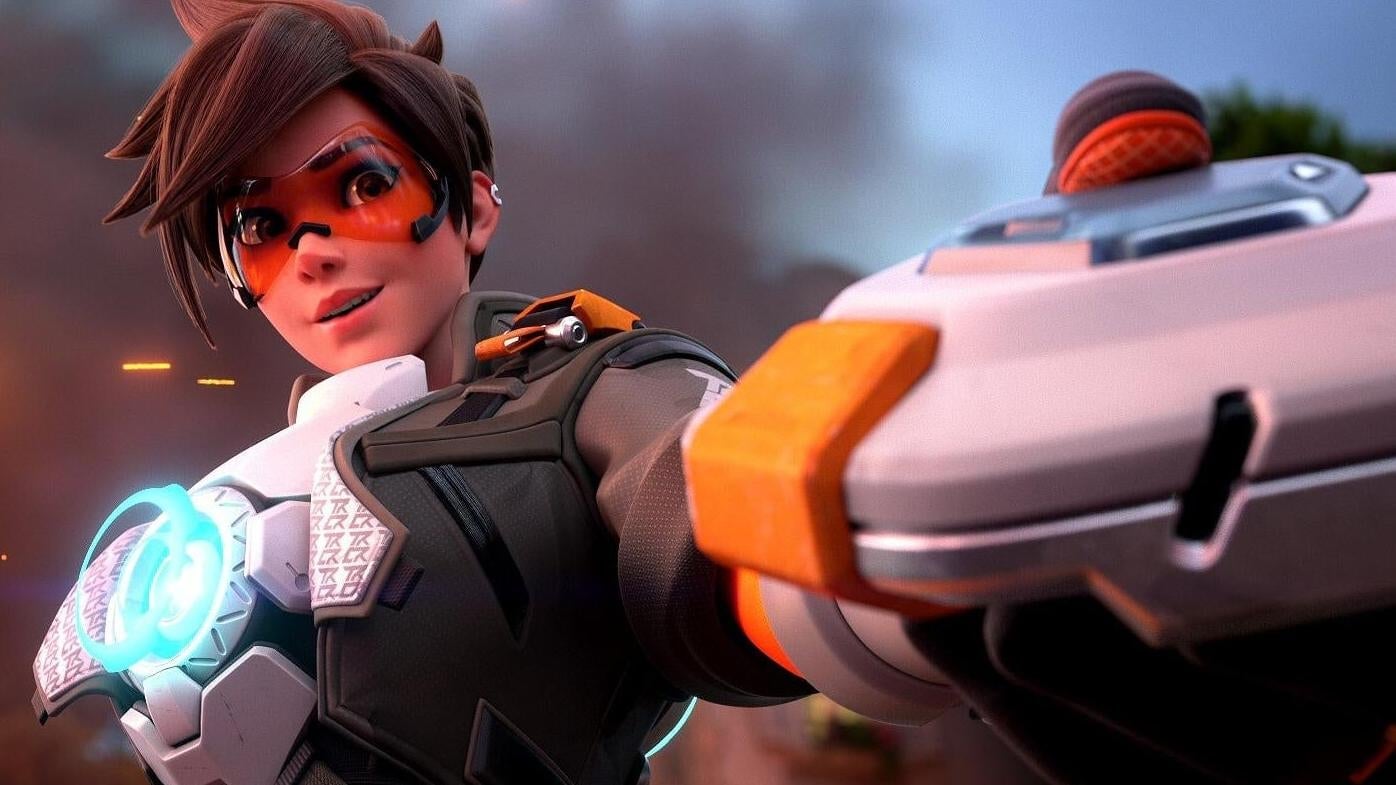
In 2026, Overwatch stands in a graveyard of its competitors. Blizzard’s hero shooter has now hit the ten-year mark, with bigger peaks and valleys than most games of its style are ever allowed to have. Somehow, despite recurring claims that the game had fallen from grace and was finally “dead,” Overwatch is still around, and is in arguably the best state it’s been since it launched in 2016. Meanwhile, its early success inspired many copycats that never got off the ground and have since been lost, their servers taken offline and the studios that made them shuttered.
Overwatch has gotten back on its feet after stumbles that would have leveled other studios and live-service games, but in a panel interview with Kotaku and other outlets, director Aaron Keller said that Blizzard’s willingness to continue supporting the game despite multiple setbacks has helped it weather the storm of live-service shut downs and internal strife.
“Blizzard’s always been very supportive of us, even when we’re going through rough patches,” Keller says. “The question is like, what can we do to help Overwatch be more successful, and then the team has always been able to, to activate, in any direction that they’re pointed in like a world-class capability.”
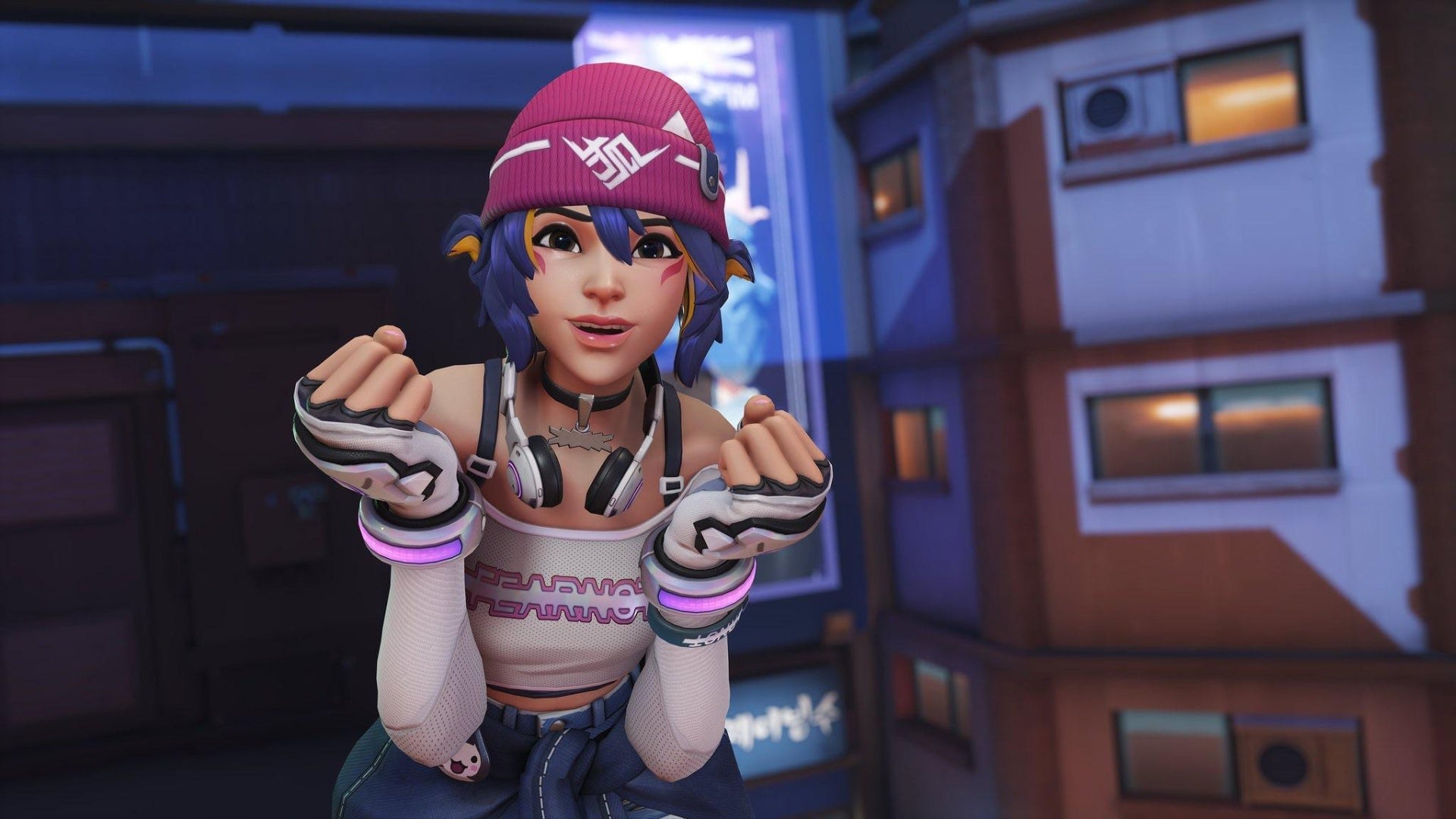
There have been several of those “rough patches,” and anyone who’s been playing the game for most of its 10 years will remember each of them vividly. There was the content drought in the lead-up to Overwatch 2’s launch that left the game with no new heroes for over two years, with skins and recycled seasonal events sustaining the live game in the interim; the official launch of Overwatch 2 coming without the headlining campaign Blizzard had promised when it announced the game; the eventual public cancelation of several of the PvE modes that were meant to accompany the new story; and then the much quieter cancellation of the story mode. As we previously reported, those who worked on Overwatch 2’s planned campaign say it was subject to development troubles, and when its first chapter finally launched a year into the game’s lifetime, its underwhelming sales led to Blizzard scrapping the project entirely.
“[The story mode] was hard to land and we had struggles with it,” Walter Kong, head of development for Blizzard’s live games and mobile division, says. “We wanted to polish up chapter one and release it to our players to get a signal of whether this content would be resonant or not, and we got a really strong signal back that the answer was, ‘not so much.’ I think it was such a harsh signal that it had a very significant effect on the morale of our team, and even on us as leaders.”
Keller points to 2021 as one of the most challenging points he faced in Overwatch’s 10 years when he was promoted to game director following the departure of original director Jeff Kaplan. This was immediately followed by the 2021 lawsuit against Activision Blizzard alleging that the company had been home to multiple cases of sexual harassment and discrimination, which Keller calls a “culural reckoning” for the company, leading to more turnover. As this was happening, Keller says that Overwatch 2’s story mode “just wasn’t coming together,” leading to Blizzard ultimately splitting the release of the sequel’s PvE mode and its PvP modes in order to finally release something it could support in 2022 instead of continuing to subject players to the content drought that plagued the game in the lead-up to the sequel.

“We had a lot of people that were still playing Overwatch, and they were playing a game that really wasn’t getting a whole lot of support,” Keller says. “So the new strategy for us became, ‘How do we get support back to that game and to those players as quickly as we could?’ And as we started working on that, it was a big pivot for the team, but as we started progressing on it, I think things really started to coalesce as people saw not just the focus that we could put into a release that was coming up into a milestone, but what it would actually mean for our players when we were finally able to launch Overwatch 2.”
Keller says the continued rough patches led to a lot of “anxiety and sleepless nights” for him, and that the muted response to the initial PvE missions, along with the subsequent layoffs that hit the team after Activision Blizzard was acquired by Xbox, required a lot of “soul searching” to find what the team believed players were actually looking for in Overwatch, resulting in resources being reallocated to the competitive game. Kong admits, however, that there was a point at which the waves of negative sentiment from players that hit Overwatch 2 as it failed to deliver most of what Blizzard had promised put its future in question.
“To me, it is an experience of ups and downs,” he says. ”Obviously, it feels great to launch a game and have the world just be gushing about how much fun they’re having. And then it also is really, really tough to be reading a ton of negative reviews on Steam just questioning whether we should be doing this at all. Is this game worth pushing?”
Keller says that the core of Overwatch began with inspiration from games like Team Fortress 2 (the “original” hero shooter) and League of Legends with its giant roster of characters, as well as residual influence from the canceled Titan project that would eventually become Overwatch, but Kong admits that Marvel Rivals has served as one of the most impactful games on Overwatch’s trajectory since its launch in 2024. NetEase’s competitor made the team more open to nudging the game in new directions, such as implementing in-match skill trees with Perks and a build-based mode in Stadium, after years of maintaining a more conservative approach.
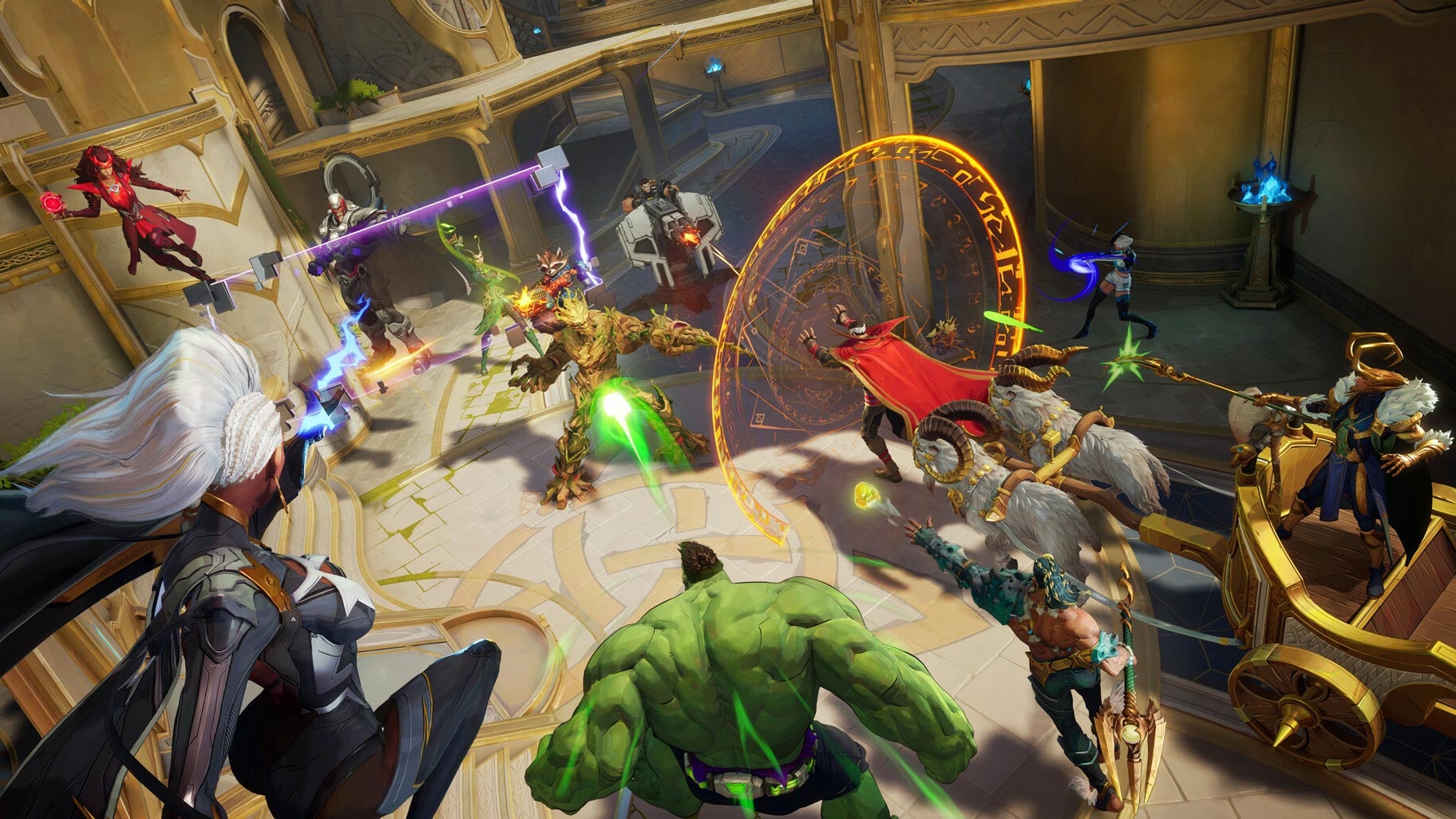
“I thought the significance of Marvel Rivals’ launch to us was having a direct competitor in our space,” Kong says. “And also being able to judge a greater scope of things that they were doing, that we had thought about doing, but perhaps were a bit [too] conservative to try. I think when you have an audience of players that seem to be resonant with some of the things that you’re doing, it may be a bit difficult to stretch and take more risk, but I think when Marvel Rivals launched, it had a pretty meaningful impact on our game. It had a dual impact. One was it scared us a bit, and on the other hand, I think it gave us license to go for it, to be less risk-averse because we felt that if we stayed conservative, then we were definitely going to feel some of the competitive pressure, and I think it was very energizing to see the team react in the way that it did, to just go after it, to take bold actions, and I think that is what led to the execution that we brought to market with both Perks and Stadium.”
Ironically enough, Overwatch has spent close to half of its 10 years in a state of either weird limbo while waiting for a sequel, or circling the drain as a sequel that delivered almost none of the things it promised. Now, Blizzard has dropped the 2 from the title and completely reconfigured how it rolls out story in the game with annual “expansion” moments at the beginning of each year, and is releasing 10 heroes across 2026. Keller says that Blizzard has spent years trying to figure out how to support Overwatch as a live game, and without all those failures the team might not have figured it out.
“I don’t think we really understood what it meant to fully support a live-service shooter,” Keller says. “The demands that players have for the amount of content that you’re putting out, and just for the desire to have the game evolve, we weren’t really there yet, and to be honest, I don’t think we really understood that until the last few years after Overwatch 2 shipped.”

The sad truth of the matter is that a live-service game making it 10 years is an anomaly in this day and age, and Keller says Blizzard’s willingness to support its decade of growing pains is what helped it finally morph into something that is both sustainable for Blizzard and also holding players’ attention, even if it’s not the biggest game in the world anymore. Blizzard has decades of infrastructure and wells of money that has let Overwatch fail more times than most games ever get a chance to, and somehow find itself in a better place than it’s ever been. The dark cloud of broken promises may hang over it in the eyes of those who bounced off, but the fact that Overwatch is still alive at year 10 with a more defined plan than it’s ever had, and that it could maybe win those lapsed players back, is something a lot of live-service games can’t claim.
About the Author


