
Embracer, the investment holding company that previously raced around hoovering up some of the gaming industry’s biggest (and most distressed) players, has announced it’s doubling down on what it does best: talking about synergies, IPs, and new names for its business. For the third year in a row, the company is working on splitting itself into different entities. Like a financial ameba, it’s splitting into Embracer and Fellowship Entertainment. The good stuff, like Lord of the Rings, will go with the latter, while the chaotic grab-bag of less popular stuff stays with Embracer.
“The main rationale to spin-off Fellowship is to increase management focus to capture the full joint potential of the IPs, their respective communities and some of the best game developers in the world,” Embracer chairman Lars Wingefors wrote in a letter to shareholders on May 20 following the release of the company’s latest, less-than-impressive earnings report. “Just like Asmodee and Coffee Stain, we believe Fellowship Entertainment will thrive the most by becoming its own standalone business.”
Wingefors was referencing a transformation that began back in 2024 and saw Embracer spin off a bunch of its smaller brands and its tabletop gaming business into separate entities, one of which would be loaded up with nearly $1 billion in debt. When Coffee Stain, which publishes Goat Simulator, was formally spun off in May 2025, everything that was left at Embracer was rebranded as “Fellowship Entertainment.” Now, Fellowship Entertainment is getting spun off as well, with everything that’s left this time around going back to being called Embracer.
Divvying up the marbles
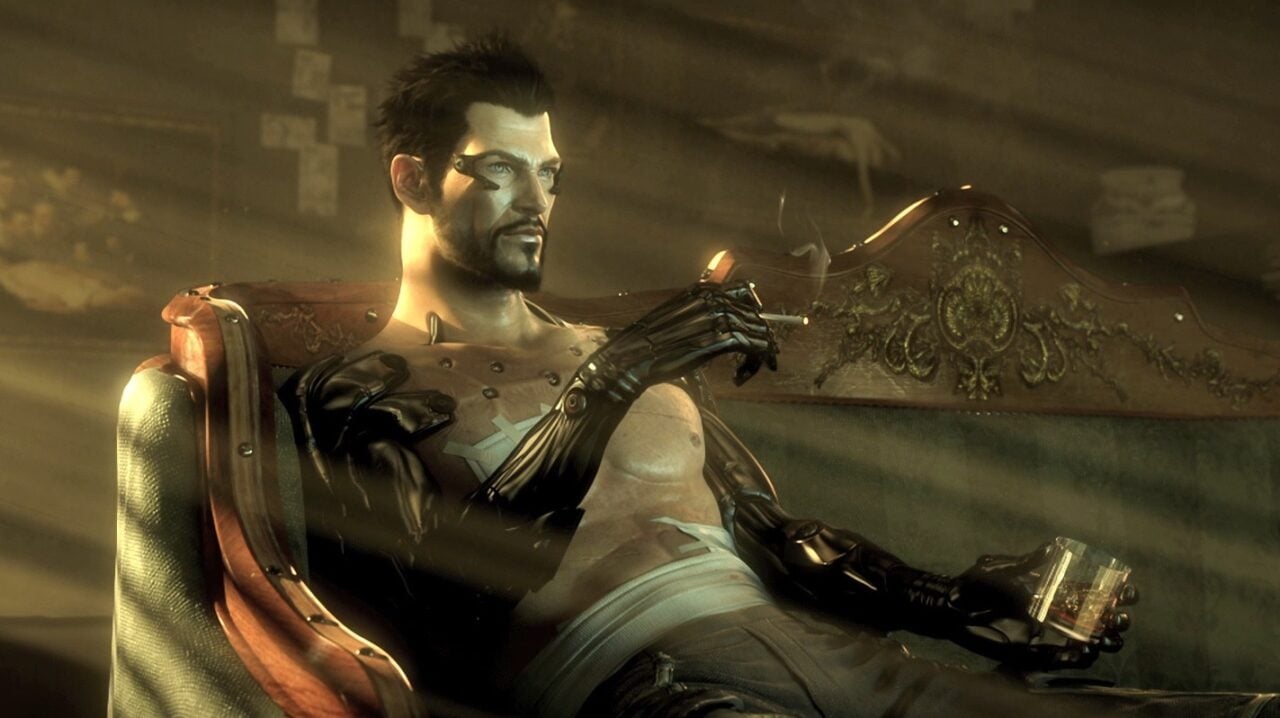
Fellowship Entertainment will get The Lord of the Rings, Tomb Raider, Metro, Dead Island, Deus Ex, Time Splitters, Thief, Legacy of Kain, and other franchises, along with their respective studios. Embracer will keep Destroy All Humans, Desperados, Gothic, Killing Floor, Kingdom of Amalur, Wreckfest, and a bunch of other stuff like the game licenses for Hot Wheels Unleashed and SpongeBob SquarePants. It really does feel like spring cleaning for Frankenstein’s monster of a balance sheet.
“Ever since the foundation of Embracer the question has been asked to me what the strategy of the group really is,” Wingefors wrote. “The reality is that it has been difficult to easily communicate the Embracer story historically due to its mix of operational strategies and a combination of decentralization from HQ but part-centralization within operating groups.”
That difficulty seems to be continuing. Embracer will remain a “highly decentralized with several different strategies across each of the entities in the business segment” while Fellowship Entertainment seemingly acts like more of a traditional gaming publisher. It’s hard not to see this as anything other than one final attempt to undo Embracer’s disastrous legacy by sticking all of the good assets in column A and offloading the rest in column B.
“Cost control does not get enough respect”
Wingefors wrote that he believes Fellowship’s franchises are some of the most undervalued in the industry and claims profitable growth will be achieved by releasing at least two “outstanding AAA products” per year, more licensing deals, “adaptation of new technologies and AI,” and management that is more focused. He said all the company needs now is “some patience and great execution.”
“The combined share price today has increased by approximately 1,000% since the IPO,” he continued. “However, I am painfully aware that the value creation has been negative since the peak pandemic years. With that said, I am confident that today’s announced changes will enable more and faster shareholder value creation than keeping it in the current structure.”
Wingefors added that one of the winds in the new entity’s sale will be the number of developers it employs in Europe, where development costs are cheaper. A decade into the journey, the investor shared two of his biggest learnings around the realities of game development. “The businesses that have done best are often the ones that kept focusing on what already worked, without letting costs run away,” he wrote. Make good games, in other words, and don’t waste too much money doing it.
About the Author