

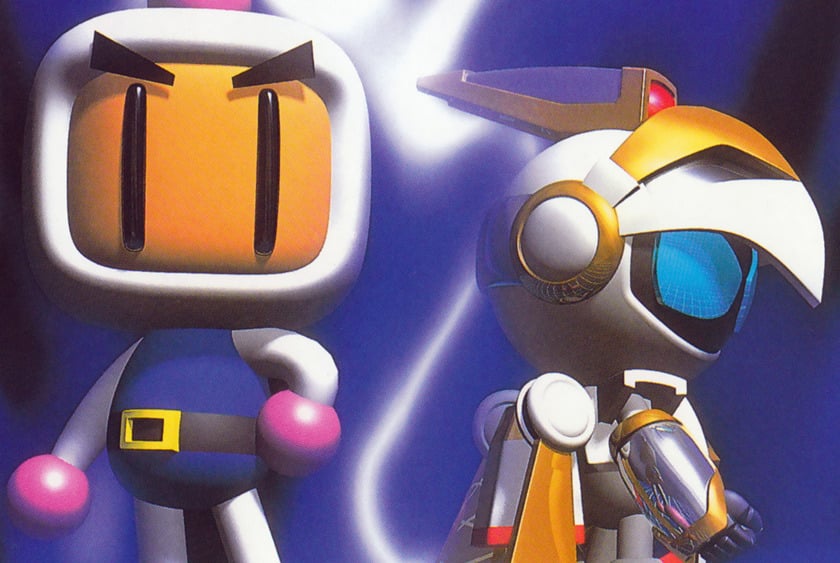
When Konami dropped a Super Bomberman Collection earlier this year, I was hoping this was just a gateway to “the real stuff.” Make no mistake, the Super Bomberman series is great, the best party games the 32-bit era had to offer. But slide one generation forward and you’ll land on something truly magical and still unreplaced. A Bomberman made before kinks of 3D mascot games were figured out, and all the more beautiful for it.
The fifth generation of video games was its most significant transition. Increased bits were nothing compared to the intimidating leap from 2D to 3D. Mario’s jump was the most graceful. Super Mario 64 isn’t just a miracle on its own, but a seamless translation of the weighty jumps and acrobatics that made the plumber famous in the first place. The playbook for other first-wave games wasn’t as neatly written.
Turok, Shadows of the Empire and Blast Corps feel like games landing on a tarmac that’s still being built. Flat chiseled masses of unfinished masonry with hasty spray paint crusted atop. To this day I’m not sure what Tetrisphere was trying to accomplish. Concussed intentions doesn’t make them bad games, but it does illustrate the fog many developers were working through. The very configuration of the Nintendo 64 controller and its splat of c buttons has a real “you figure it out” vibe.
Hudson Soft was eager for what 3D had to offer. They hit the PlayStation and N64 quickly with sports titles and Bloody Roar. What the new dimension meant for little ol’ Bomberman was more difficult. His formula had been elegant and unchanged since 1983. Move along a top-down grid of blocks and crates. Drop bombs. Hope to blow up your enemies instead of yourself. They had developed his N64 debut for six months before getting anxious about the competition and starting from scratch.
What they made was not Mario 64, and critics at the time were quick to point that out. What those critics failed to appreciate was what Hudson did produce. An uncanny, boutique and vibey puzzle platformer that could only exist when everything was a riddle.
In Bomberman 64, the short, long-eyed hero was back. With bombs. Like before, the explosions could take out enemies, obstacles and yourself. How you used the bombs and how you navigated the space was an ongoing discussion. Bomberman couldn’t jump like Mario, but could hop across carefully placed bombs. Use power ups and larger explosives at your discretion. Each level and world introduced new landscapes that could react to your bombs in wildly different ways. Snow covered slopes. Fantasy castles with rocket boost tiles. Hot, hot magma.
Of the four initial worlds, the most memorable to me was Blue Resort. A quaint, Parisian bottled slice of a city with many secrets, courtyards and passages. Discovering you could lob bombs into open windows for hidden items felt like a new synapse coming to my adolescent brain. A game where all you can do is throw bombs, but how those bombs engaged your surroundings was in constant fluctuation.
Bomberman 64 has been welcomed as a cult classic, but was chastised at the time for playing to its own tune. Some puzzles could be obtuse, especially in boss encounters. The camera was rude on a lot of N64 games, but Bomberman’s hid a lot. To unlock some of the final stages you needed to collect all 100 “gold cards,” which was a tall order between levels.
There would be three more Bomberman games on the 64. Hero, The Second Attack and, confusingly, a Japanese exclusive also titled Bomberman 64 (the first was Baku Bomberman in Japan). Each clearly responded to the common complaint that Bomberman 64 wasn’t closer to the more popular platformers at the time. It made for perfectly fine but less distinctive games (that cost a fortune among collectors regardless).
Still a hidden gem to some, time has otherwise been very good for Bomberman 64. An odd duck that grew to be appreciated as a beautiful swan. Fifth gen games have already been exhumed for outsider house and techno tracks, and this era of the Bomberman series has some of the best. If Konami is motivated to wrap up a 3D Bomberman collection, it would be wonderful to revisit some of the best of this better-defined, transitional era.
About the Author


